Strength Training for Osteoporosis: What Works
By Johnny Barhoumeh
Osteoporosis, Strength Training, Northbrook
Is Strength Training Safe When You Have Osteoporosis?
Yes, for most people. The research on resistance training and bone density is clear, and the bigger risk is usually doing nothing. If you've been cleared by your physician, a supervised personal training program built around your bone health is one of the most useful things you can do.
If you've been diagnosed with osteoporosis or osteopenia, you've probably heard two conflicting messages. Your doctor told you to build strength. A well-meaning friend, or a scary article, told you that lifting weights could snap something. Both can't be fully right, and the confusion keeps a lot of people at 60, 65, 70 years old doing nothing more than walking, which isn't enough to change bone density on its own.
What the Research Actually Shows
The most relevant study here is the LIFTMOR trial, a randomized controlled trial published in the Journal of Bone and Mineral Research. Postmenopausal women with low bone mass, including some with osteoporosis, did eight months of supervised high-intensity resistance and impact training — heavy deadlifts, overhead presses, and jumping. The group that trained saw measurable gains in bone mineral density at the spine and hip, along with better physical function. No fractures occurred in the training group. You can read the full study on PubMed.
That result surprised a lot of people, because for years the standard advice was gentle, low-load exercise only. The newer consensus, reflected in guidance from sources like the Mayo Clinic, is that bone responds to load. Bone is living tissue. It adapts to the stress you put on it, the same way muscle does. Undertraining doesn't protect it — it just stops giving it a reason to stay strong.
None of this means every person with osteoporosis should be doing heavy deadlifts on day one. It means the exercise itself isn't the danger. Untrained, poorly coached exercise is.
What's Actually Safe, and What to Be Careful With
This is where individual factors matter, which is exactly why this isn't a program you should build from a blog post. A coach needs to know your bone density scores, your fracture history, and where your risk is concentrated before writing a single set. In general, though, here's the shape of it:
- Loaded strength work is the goal, not the risk. Squats, presses, rows, and hip hinges, loaded appropriately for your starting point, are what stimulate bone.
- Spinal flexion under load is usually avoided. Exercises that round the spine while loaded — think a weighted sit-up or a toe-touch with a barbell — raise vertebral fracture risk more than they help.
- Balance work belongs in the program. A fall is often what turns low bone density into an actual fracture. Balance training reduces that risk on its own.
- Progression has to be gradual and tracked. Starting too heavy, too fast, undoes the benefit of coaching in the first place.
- Impact can help, but it's not for everyone. The jumping component in LIFTMOR was supervised and scaled to each participant. It's not a default for someone with a recent fracture or severe osteoporosis.
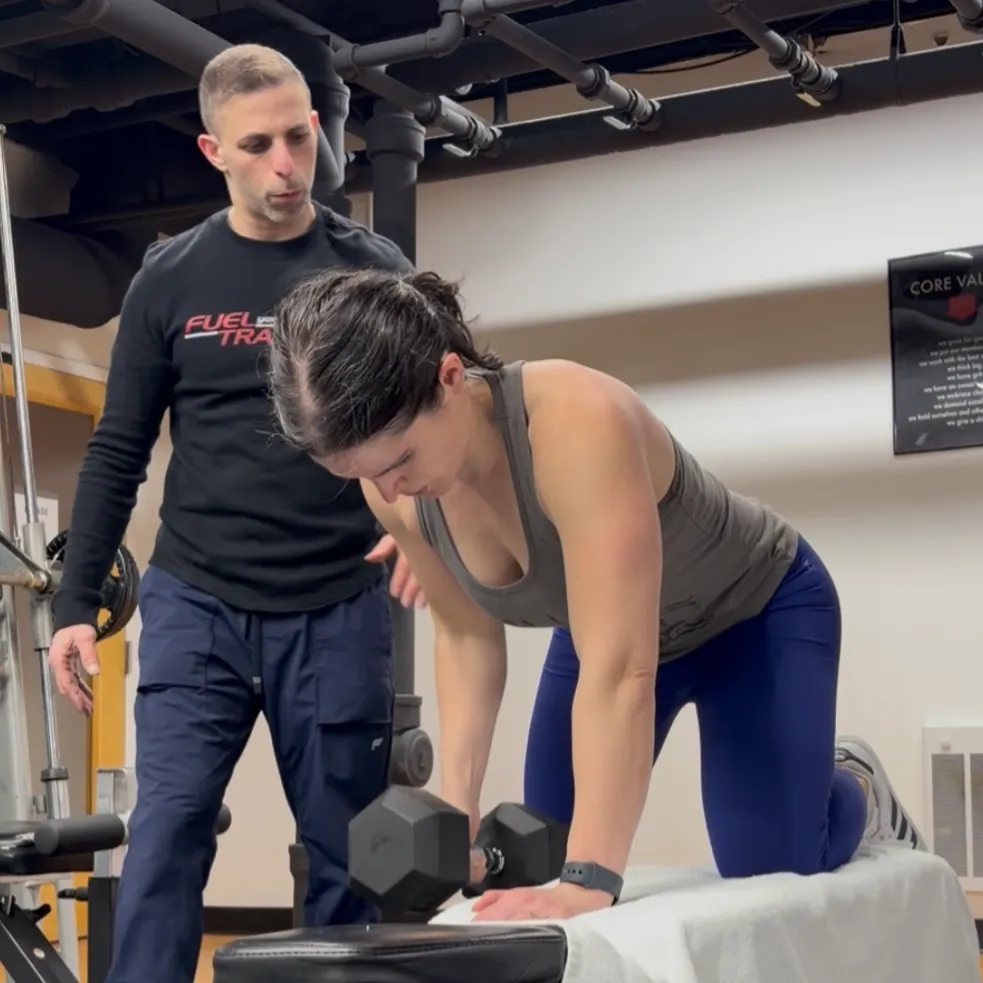
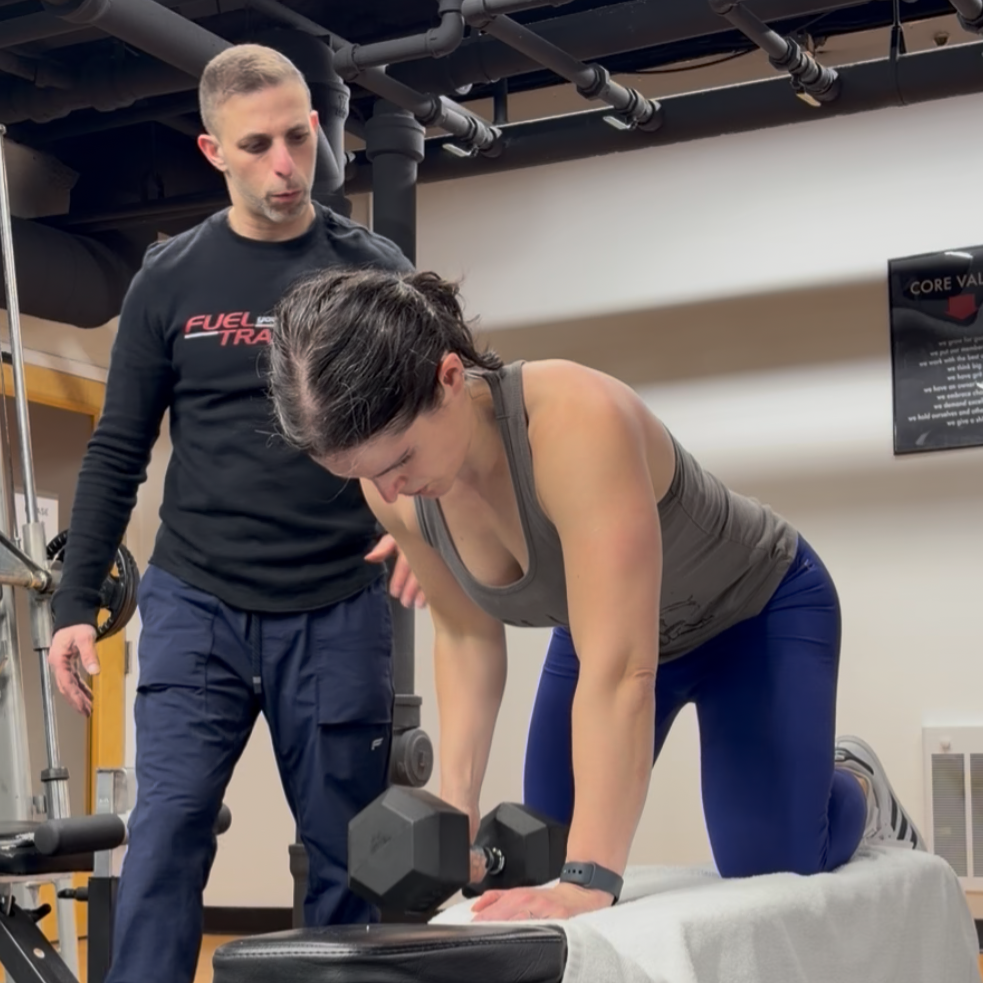
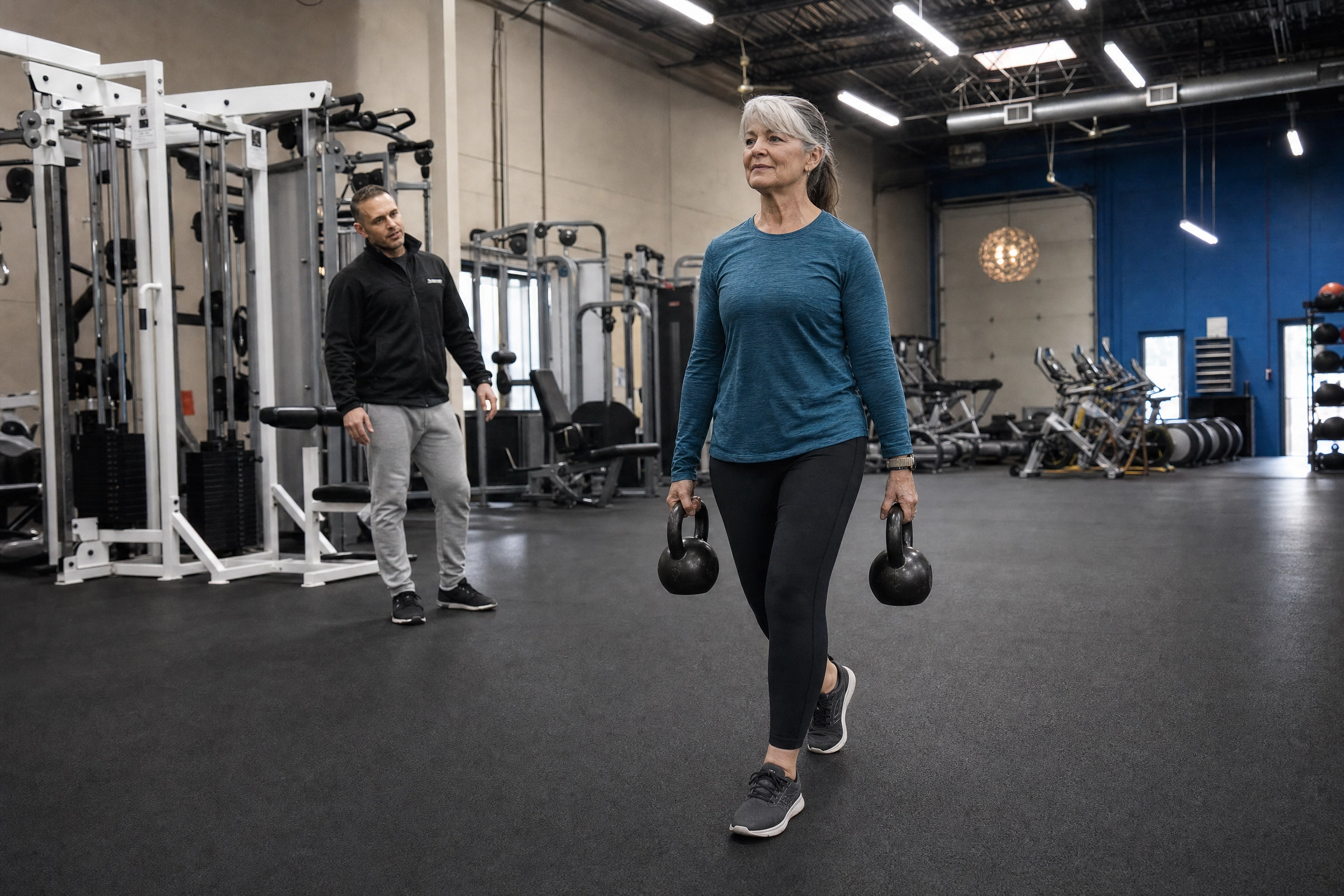
Coaching one-on-one means a program can be adjusted set by set, not just week by week.
💡 Pro Tip: Ask any trainer you're considering how they'd modify a deadlift or a squat for someone with vertebral osteoporosis. If the answer is vague, keep looking.
Why Coaching Changes the Risk Equation
Two people with the same DEXA scan results can need completely different programs. One might have low density concentrated in the spine and need to avoid flexed-spine loading entirely. Another might have it in the hip and need a totally different emphasis. A generic class or a workout app can't tell the difference. A coach who reads your history and watches your form can.
This is also where "injury-aware" stops being a marketing phrase and starts meaning something specific: knowing which movements to regress, how to load progressively without guessing, and when to pull back. At Fuel Your Training, that's the whole model. It's why we run 1-on-1 and small semi-private sessions instead of group classes — someone managing bone density needs a coach watching their bar path, not a room of twelve people following a screen.
📌 Key Takeaway: The goal of a bone-health strength program isn't to avoid all risk. It's to load your body enough to build a stronger skeleton, while managing the specific movements that carry the most risk for you.
Where This Fits With Your Doctor or Physical Therapist
Strength training doesn't replace medical care for osteoporosis, and it isn't a substitute for physical therapy if you're currently in it. Think of it as the next step. Physical therapy is often where you go after a fracture or a new diagnosis, to restore movement and address pain safely. Strength training with a coach is what comes after — a longer-term way to keep building the bone density and strength that PT started to restore.
Before starting any new strength program with osteoporosis or osteopenia, talk to your physician or physical therapist. Bring your most recent bone density results if you have them. A good coach will want to see them too.
⚠️ Warning: Don't start a resistance program for osteoporosis without medical clearance, especially if you've had a previous fragility fracture. Your coach and your doctor should be working from the same information.
What This Looks Like at Fuel Your Training
Our studio is at 1430 Paddock Dr in Northbrook, appointment-only, one client or a small group on the floor at a time. When someone comes to us with an osteoporosis or osteopenia diagnosis, we start with a movement assessment and a conversation about their bone density results and any fracture history, then build the program around that. Some clients start 1-on-1 to get form dialed in before moving into semi-private sessions. Others stay 1-on-1 the whole way. It depends on what your body needs, not on what's easiest to schedule.
If you want a sense of how we work with clients more generally before booking, our piece on finding a real strength training coach on the North Shore covers what to ask any trainer, osteoporosis or not.
This article is educational and not medical advice. Consult your physician or physical therapist before starting any exercise program.
The Short Version
- Strength training is generally safe and beneficial with osteoporosis when it's supervised and built around your specific bone density results.
- Bone responds to load. The LIFTMOR trial showed measurable bone density gains from supervised resistance and impact training in women with low bone mass.
- Certain movements need modification, especially loaded spinal flexion, and impact training isn't right for everyone.
- Get medical clearance first, and treat strength coaching as what comes after physical therapy, not instead of it.
- Coaching quality matters more than the exercise list. The same squat is safe or risky depending on who's watching it happen.
Start With a Conversation, Not a Workout
If you've got an osteoporosis or osteopenia diagnosis and you're not sure where to start, the first step isn't a workout — it's a conversation with a coach who'll actually look at your history. Call us at 312-735-1010 or book your free intro session in Northbrook and we'll talk through what a safe starting point looks like for you.