Exercise After Hip Replacement: Rebuilding Strength Safely
By Johnny Barhoumeh
Hip Replacement, Strength, Northbrook
Exercise After Hip Replacement: How to Rebuild Strength Safely With Your Care Team
Exercise after hip replacement works best when your surgeon and physical therapist clear you first, and a coach then builds strength gradually from where therapy ended. At our studio, that coaching is one-on-one personal training in Northbrook.
Your physical therapist discharged you. The incision healed. You can walk without a cane, but you do not trust the hip yet, and you are not sure what is safe to do next. That gap is real, and many people fall into it. This article explains what usually happens after therapy ends, what a good coach does in that gap, and which questions to ask before you book anyone.
This article is educational and not medical advice. Consult your physician or physical therapist before starting any exercise program.
Who Leads Your Recovery, and When Does a Coach Come In?
Your surgeon and physical therapist lead. They know your surgical approach, your bone and tissue quality, and any movement limits you were given. A personal trainer does not replace them and does not treat the hip.
Physical therapy usually ends when you meet a set of functional goals. Insurance coverage often ends around the same time. Strength is rarely finished at that point. Walking, stairs, and getting out of a chair may feel fine, while the muscles around the hip, the other leg, and your trunk are still weaker than they were before the problem started.
That is where we come in. We are the step after physical therapy. If you are still in therapy, stay with your therapist. If you are not sure which side of that line you are on, ask them directly.
📌 Key Takeaway: Get clearance in writing, or at least a clear yes from your surgeon or physical therapist, before your first training session. A good coach will ask for it.
What Does Strength Training After a Hip Replacement Aim to Do?
The goal is a body that moves well in daily life and holds up over the years. Specifically, a coach works on a few things:
- Hip and glute strength: These muscles help you stand up, climb stairs, and stay steady when you walk on uneven ground.
- The other leg: Many people lean on the unoperated side for months before and after surgery. That leg often needs attention too.
- Trunk and back: A stronger midsection supports the hips and spine when you lift, carry, or reach.
- Balance: Standing on one leg and shifting weight with control builds confidence and lowers the chance of a fall.
- Confidence: After surgery, people often avoid movements that are fine. Careful, supervised practice helps you trust your body again.
Notice what is missing: a list of exercises and sets. We do not publish one, because the right plan depends on your surgeon's instructions and how your hip responds. A program written for a stranger on the internet can do harm.
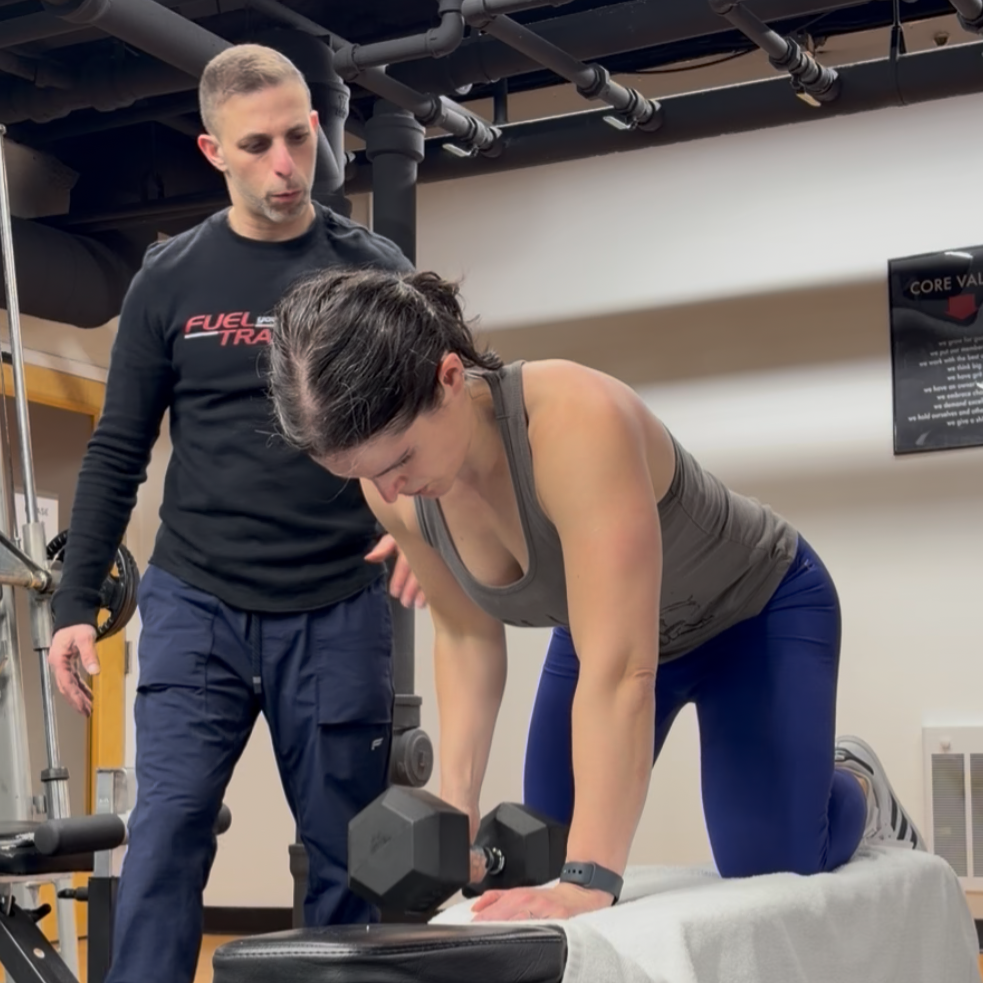
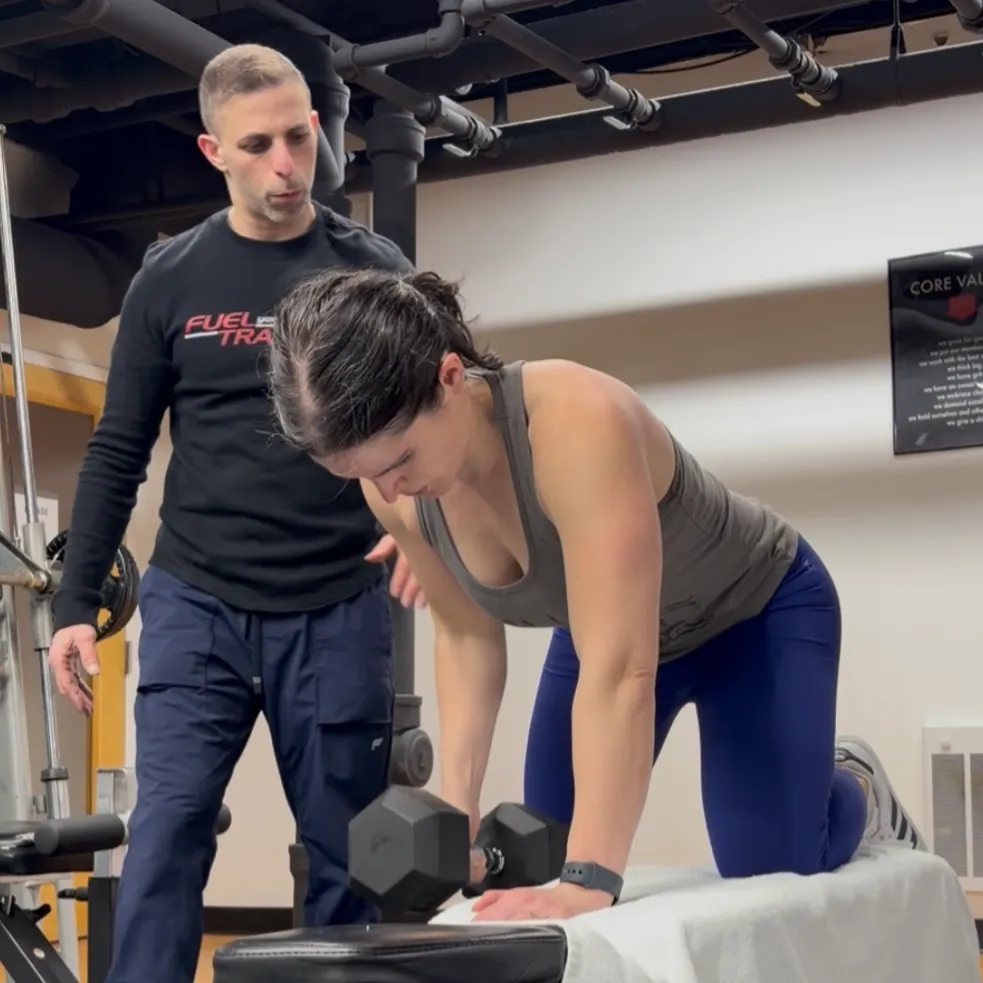
One-on-one coaching at our Paddock Drive studio. Each session is planned around the person in front of us.
What Should You Tell Your Coach in the First Session?
Bring everything you know about your surgery. The more your coach knows, the better the plan.
- Your surgeon's instructions: Any movement limits, and whether they are permanent or temporary.
- Your therapy discharge notes: They show where you finished and what your therapist wanted you to keep working on.
- Your history before surgery: How active you were, which sports you played, and what you want to do again.
- Other conditions: Arthritis in another joint, back pain, osteoporosis, or heart conditions all shape the plan.
- What worries you: If a movement scares you, say so. That tells us where to go slowly.
💡 Pro Tip: Write your questions down before the session. People forget half of what they meant to ask, and a good coach will be glad to answer all of it.
What Does a Training Session Look Like at Fuel Your Training?
Fuel Your Training is a private studio at 1430 Paddock Dr in Northbrook. It is appointment only, so you are not walking through a crowded floor with a bad hip and a worried mind. Johnny Barhoumeh, the owner and head coach, builds training around adults who are returning after a long gap or working around an injury.
A first visit is a free intro session. We talk through your history, watch you move, and discuss goals. We do not start by loading anything. We look at how you stand up from a chair, how you walk, and how you shift your weight from one leg to the other.
From there, sessions start light and progress in small steps. Your coach watches your form, asks how the hip feels during and after, and adjusts the next session. If something feels wrong, we stop and send you back to your care team. That is the right call, and we make it without hesitation.
If you want to see how we think about the knee side of the same problem, we wrote about it in Personal Training After a Knee Replacement. Much of that advice about clearance and pacing applies to hips too.
How Do You Know Whether to Slow Down?
Muscle soreness the next day is normal when you start something new. Sharp pain, new swelling, a hip that feels unstable, or pain that wakes you at night is a reason to stop and call your surgeon or physical therapist. Do not push through those signs and do not wait to see if they go away.
⚠️ Warning: A trainer cannot diagnose a problem with your implant or your healing. If something seems off, contact your medical team before your next session.
A good coach also tracks smaller signals. If you move more stiffly than last week, or you seem guarded on one side, they should ask about it and adjust, rather than follow the plan on the page.
How Should You Choose a Trainer for This?
Ask these questions before you sign up with anyone:
- Do you ask for medical clearance? The answer should be yes, every time.
- Have you worked with clients after joint replacement? Ask what they changed for those clients and why.
- Will I train one-on-one or in a group? Early on, one-on-one attention matters. Some people later move to small-group sessions for variety and cost.
- What happens if my hip hurts? You want a coach who stops the session and refers you back, not one who says to work through it.
- Do you promise results? Be wary if they do. Recovery varies, and an honest coach says so.
Rates for personal training on the North Shore vary. For what we charge, call us and we will explain how our sessions work. We would rather answer that on the phone than guess in a blog post.
Summary: What to Remember
- Clearance comes first: Your surgeon and physical therapist lead, and a coach starts after they say you are ready.
- Strength usually lags behind walking: Feeling fine on a walk does not mean the muscles around the hip are back to full strength.
- Your plan is individual: Surgical approach, movement limits, and history all change what is right for you.
- Listen to pain: Sharp pain, swelling, or instability means stop and call your care team.
- Pick a coach who asks questions: A good one wants your records, your history, and your worries.
Ready to Talk About Your Next Step?
If your doctor and physical therapist have cleared you to train, come see the studio. Your first session is free, and there is no pressure to sign up. Book your free intro session or call us at (312) 735-1010. We are at 1430 Paddock Dr, Northbrook, IL 60062, and we also work with people from Glenview, Northfield, Deerfield, Wilmette, Winnetka, Glencoe, and Highland Park.