Personal Training After a Knee Replacement
By Johnny Barhoumeh
Knee Replacement, Strength, Northbrook
Personal Training After a Knee Replacement: What the Next Step Looks Like in Northbrook
Personal training after a knee replacement picks up where physical therapy leaves off, once your surgeon and therapist say you can build strength on your own terms. At our studio, one-on-one personal training is built around exactly that handoff.
You finished the exercises on the sheet. The swelling is down and you walk without thinking about it. Then the discharge paperwork arrives and nobody tells you what comes next. Most people we meet at this stage feel stronger than before surgery in some ways and unsure in others. Stairs still feel tentative. The operated leg still lags behind the other one. This post explains what a coach can do for you, what to ask before you hire one, and what we will not do.
⚠️ Warning: This article is educational and not medical advice. Consult your physician or physical therapist before starting any exercise program. Your surgeon decides when you are cleared to train, and your therapist decides what you are cleared to do.
When is it time to move from physical therapy to a trainer?
It depends on your surgeon, your recovery, and your therapist's read of how you are doing. There is no universal date. Some people are discharged from therapy and cleared for general exercise in the same visit. Others get a discharge with a list of limits.
Before you book with any trainer, get two things from your care team: clearance to begin a general strength program, and a list of anything to avoid. Bring that list to your first session. We would rather read it than guess.
A trainer does not replace your physical therapist. Your therapist treats the joint and works through the stages of recovery. We start after that work ends and build general strength, balance, and confidence. If something hurts in a way that worries you, the answer is a call to your surgeon's office, not a harder workout.
What does a coach actually do for you at this stage?
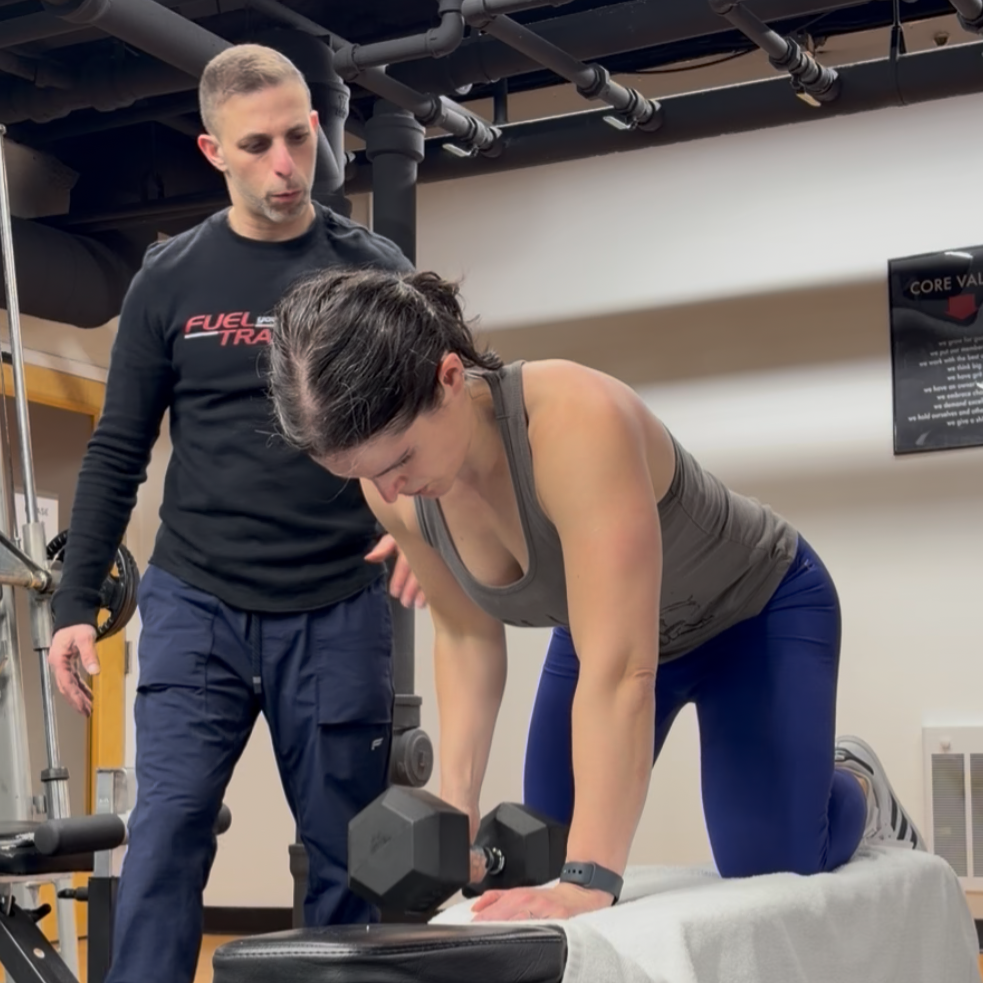
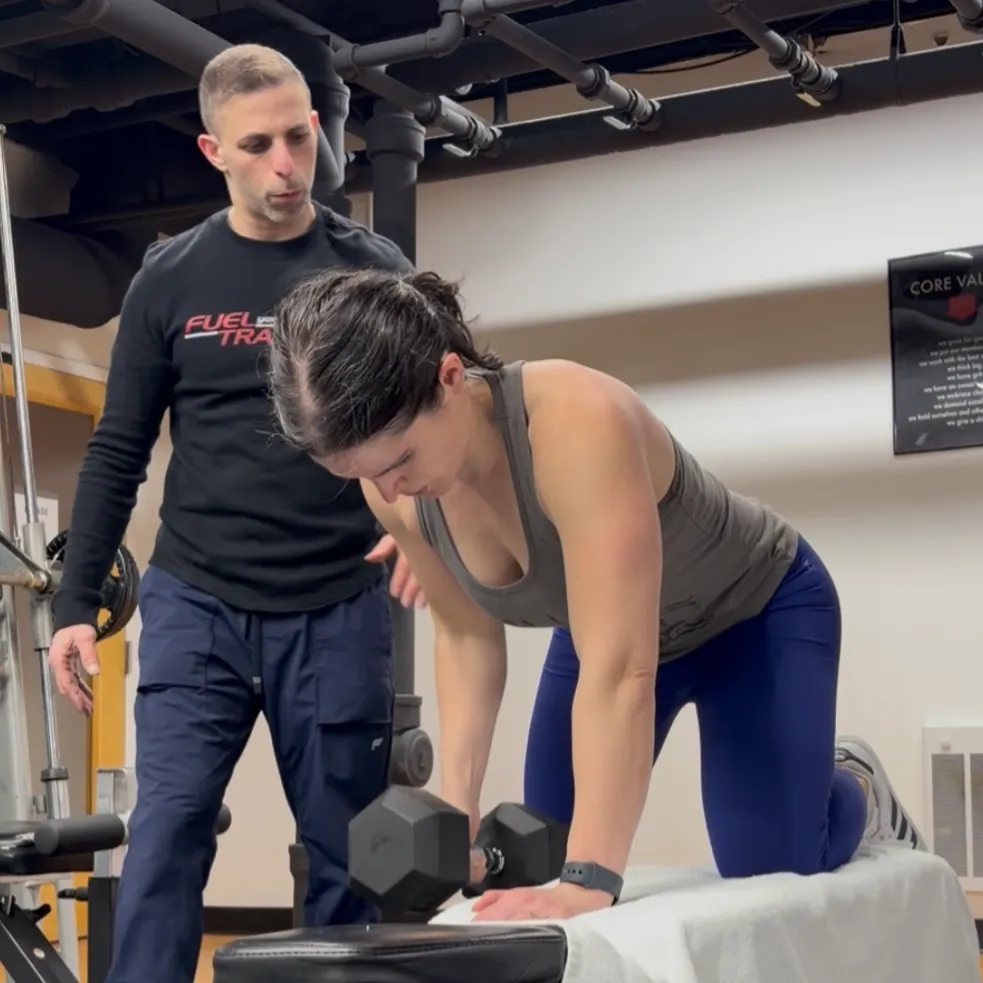
Therapy gets you walking and moving. Training asks a bigger question: can you carry groceries up the stairs, get off the floor, and play with your grandkids without thinking about your knee? A good program works on that gap. Here is what that looks like in our Northbrook studio.
- A movement check first: We watch you squat to a box, step up, and walk. We look at how you load each leg, because the operated side often does less without you noticing.
- Strength on both legs: We load the operated and non-operated leg separately at first, so the stronger leg does not take over.
- The hips and trunk, not only the knee: A knee works better when the hip above it is strong. Much of our early work goes there.
- Balance work: Short, controlled drills near a rail or rack. We add difficulty slowly.
- Weight that goes up in small steps: Progress is slow on purpose. Soreness is normal. Sharp or joint pain is a reason to stop and tell us.
💡 Pro Tip: Tell your coach about the days that feel bad, not only the good ones. A knee that is stiff on a cold October morning changes what we do that session, and we would rather adjust than push through.
One-on-one coaching at Fuel Your Training, 1430 Paddock Dr, Northbrook.
Why does a private studio suit this stage?
Our studio is appointment only. Nobody is racing past you with a barbell, and you do not wait for a machine. That matters when you are rebuilding trust in a joint. You can take your time on a step-up and nobody is watching.
Johnny Barhoumeh runs the studio and coaches every client personally. Our approach is injury-aware and focused on long-term strength for adults. We are not a bootcamp, and we do not run high-impact classes. Our clients are adults who often arrive with something to work around.
If you have a related joint condition, our post on working out with knee arthritis covers how we think about loading a sore knee.
What should you ask a trainer before you hire one?
Ask these questions of anyone, including us.
- "Will you work from my surgeon's and therapist's guidance?" The answer should be yes, and they should ask to see it.
- "What will you not do with me?" A good coach has a clear list. A coach who says there are no limits is a red flag.
- "How do you decide when to add weight?" Look for a plan based on how you moved last session, not a calendar.
- "What happens if I have pain mid-session?" You want a coach who stops, not one who says to push through.
- "Will you talk to my physical therapist if I ask?" Coordination helps, and a trainer who welcomes it is usually a safe choice.
📌 Key Takeaway: The right trainer works alongside your medical team. If a trainer promises to fix your knee or skip the doctor, walk away.
What we do not do
We do not prescribe rehab. We do not treat, heal, or cure anything. We do not diagnose why your knee is stiff or swollen. If we see something that looks off, such as swelling that keeps growing, warmth, or pain that changes, we stop and send you back to your surgeon or therapist.
This also is not the right fit for everyone. If you are still in active therapy, finish it first. If you have not been cleared for exercise, wait. We will gladly be here when you are ready.
What does the first visit look like?
Your intro session is free. You bring your clearance and any notes from your care team. We talk through your surgery date, your goals, and what scares you a little. Then we do a short movement check and you leave with a plan for the first few weeks. There is no contract and no pressure to sign up that day.
We serve Northbrook, Glenview, Northfield, Deerfield, Wilmette, Winnetka, Glencoe, and Highland Park, so most clients are a short drive away. For pricing, call us. We will quote you based on what you need rather than post a number that may not fit your situation.
Summary
- Get clearance first: Your surgeon and physical therapist decide when you can start and what to avoid.
- Training comes after therapy: A coach builds general strength and balance once rehab ends. We never replace it.
- Both legs matter: Early work balances the operated and non-operated side, with plenty of hip and trunk strength.
- Progress is gradual: Weight goes up in small steps, and pain means we stop and check in with your care team.
- Ask hard questions: Choose a trainer who asks for your medical guidance and tells you what they will not do.
Ready for the next step after your knee replacement?
Book your free intro session at fuelyourtraining.com/get-started or call +1 312 735 1010. We are at 1430 Paddock Dr, Northbrook, IL 60062.