Exercise for Osteopenia: A Guide for Women Over 50
By Johnny Barhoumeh
Osteopenia, Bone Density, Northbrook
Exercise for Osteopenia After 50: What Actually Builds Bone Density
Yes, you can strength train with osteopenia, and for most women it's the most useful thing you can do for your bones. At Fuel Your Training, our personal training programs start every new client with a movement and health history review before we load anything, which is exactly the kind of caution this diagnosis calls for.
If you just got a DEXA scan back with the word "osteopenia" on it, you're probably in one of two camps. Either your doctor said "keep an eye on it" and moved on, leaving you unsure what that means for your workouts, or you've read enough online to be nervous about lifting anything heavier than a grocery bag. Both reactions are understandable. Neither one gets you closer to stronger bones.
What Osteopenia Actually Means
Osteopenia is a bone density measurement, not a disease. A DEXA scan compares your bone mineral density to that of a healthy young adult and reports the difference as a T-score. A T-score between -1.0 and -2.5 is classified as osteopenia. Below -2.5, it's osteoporosis. Osteopenia is common after 50, especially in the years right after menopause, when declining estrogen speeds up bone loss.
It's a warning sign, not a verdict. Bone is living tissue, and it responds to the load you put on it. That's the part most women aren't told at their doctor's office.
Why Walking and Cardio Alone Won't Fix It
Walking is good for your heart, your joints, and your mood. It does very little for bone density. Bone responds to mechanical stress that's higher than what it's used to. Walking is a low-impact, low-load activity your skeleton adapted to decades ago. To signal your bones to rebuild, you need load that's new and progressively heavier.
This is where strength training earns its place. Lifting weights against resistance, and to a lesser extent controlled impact work, are the two exercise types with real evidence behind them for bone density.
What the Research Actually Shows
The most-cited study here is the LIFTMOR trial out of Griffith University in Australia, published in the Journal of Bone and Mineral Research. Researchers put postmenopausal women with low bone mass through eight months of twice-weekly high-intensity resistance and impact training, working up to heavy loads on deadlifts, overhead presses, and back squats. The women who trained saw improvements in spine and hip bone density and in physical function, with no fractures or serious injuries reported in the exercise group (Watson et al., 2018).
That trial doesn't mean everyone with osteopenia should start deadlifting heavy next week. It means heavy resistance training, done with correct form and under supervision, is not the dangerous idea it's often made out to be. The details of your own program still depend on your history, your current strength, and your doctor's input.
What This Looks Like in a Program
A sensible osteopenia program is built in stages, not jumped into. In practice, that usually means:
- Movement screen first: checking hip hinge, squat depth, shoulder overhead position, and balance before adding any load.
- Compound lifts as the foundation: squats, deadlifts or hip hinges, presses, and rows, since these load the spine and hips where bone density matters most.
- Progressive overload over months, not weeks: small, tracked increases in weight so your bones and connective tissue adapt without being overwhelmed.
- Some impact work, if appropriate: controlled jumping or landing drills, added only once strength and balance are solid.
- Balance and fall-prevention work: because a fall is the actual event that turns low bone density into a fracture.
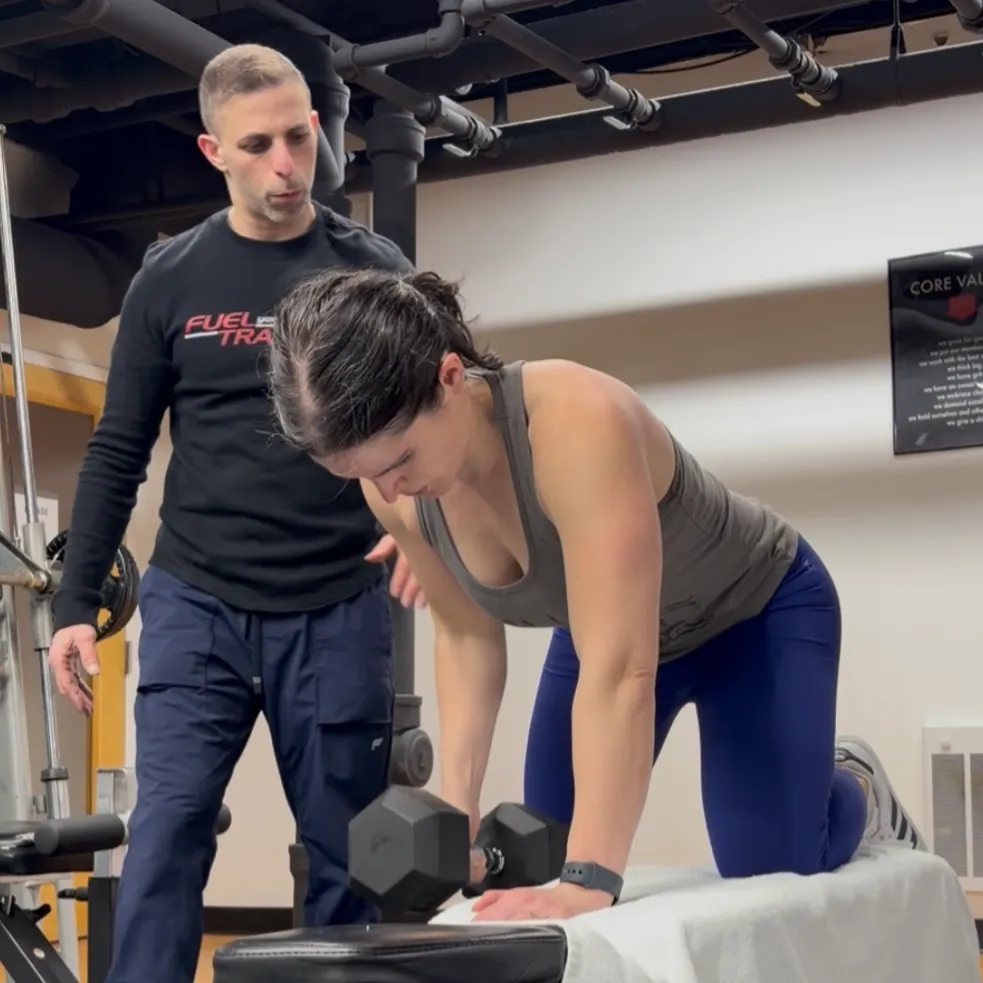
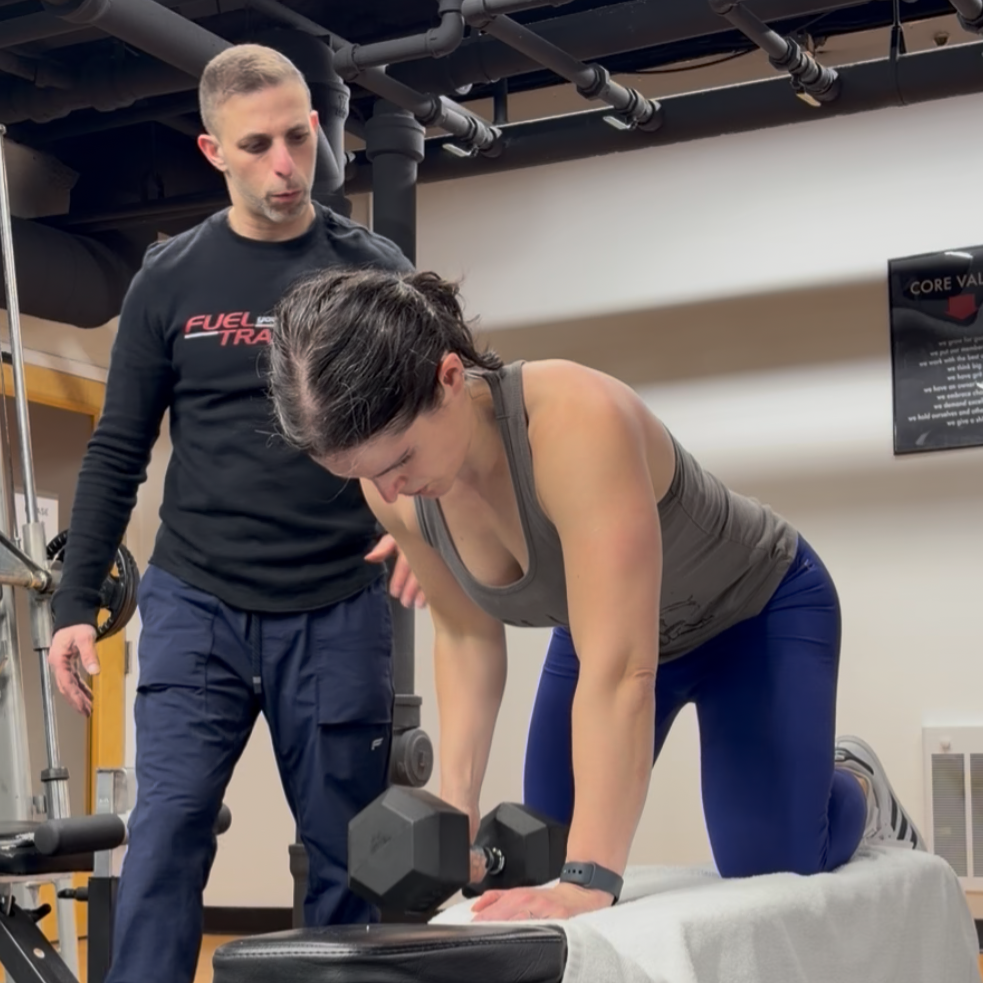
Coached, progressive loading is what separates a bone-density program from just "working out."
💡 Pro Tip: Ask your doctor for your actual T-score, not just the word "osteopenia." Knowing whether you're at -1.1 or -2.3 changes how quickly a coach should progress your loads.
Working Around Fall Risk and Form
The injuries people worry about with osteopenia almost never come from a well-coached lift. They come from falls, from untrained bodies moving in unfamiliar ways, or from jumping straight into a program that's too advanced too fast. Good coaching addresses all three: teaching solid technique on the lifts that matter, building balance and single-leg stability, and setting a pace that respects where you're starting from.
📌 Key Takeaway: The goal isn't to avoid all load. It's to apply the right load, in the right amount, in a way your body can adapt to.
⚠️ Warning: This article is educational and not medical advice. Consult your physician or physical therapist before starting any exercise program, especially if you have osteopenia, osteoporosis, or a history of fractures. A coach should work alongside your doctor's guidance, not in place of it.
What This Looks Like at Fuel Your Training
We're a private studio at 1430 Paddock Dr in Northbrook, appointment-only, so you're never trying to learn a deadlift pattern in a crowded room. Every new client starts with a free intro session where we look at your movement, ask about your health history, and talk through any diagnosis you're managing, osteopenia included. From there, most women with a bone density concern start in our one-on-one or semi-private coaching, where a coach is watching your form on every rep, not just checking in between sets.
We're not a rehab clinic, and we don't treat or reverse a diagnosis. We pick up the strength work once your physician or physical therapist has cleared you for it, and we build the program that keeps you progressing safely from there.
The Short Version
- Osteopenia is a T-score, not a life sentence: bone density between -1.0 and -2.5, and it responds to training.
- Cardio alone doesn't build bone: walking helps your heart, but strength training is what signals your skeleton to rebuild.
- Heavy, coached resistance training has real evidence behind it: the LIFTMOR trial showed density and function gains with no serious injuries in a supervised setting.
- Progression should be gradual and individualized: your T-score, history, and current strength all shape the pace.
- Get medical clearance first, then get coached: a program is only as safe as the supervision behind it.
Ready to Train With a Coach Who Knows Your History?
If you've got an osteopenia diagnosis and you're not sure what to do with it, talk to us before you talk yourself out of the gym. Call +1 312-735-1010 or book your free intro session and we'll build a plan around where your bones are today, not where a worst-case scenario says they might be.