Exercise and Sciatica: What Helps and What Makes It Worse
By Johnny Barhoumeh
Sciatica, Back Pain, Northbrook
Exercise and Sciatica: What Helps, What Makes It Worse, and When to Start Training Again
The best exercise for sciatica is gentle, controlled movement that your doctor or physical therapist has cleared, and a coach can help you build on it through personal training in Northbrook once you are ready.
Sciatica is leg pain that starts in the lower back or buttock and travels down one leg. It can burn, tingle, or feel like a deep ache. It makes you afraid to move. Most people with it want to know one thing: what can I do without making it worse?
This article is educational and not medical advice. Consult your physician or physical therapist before starting any exercise program.
What sciatica actually is
Sciatica is a symptom, not a diagnosis. It means the sciatic nerve, or one of the nerve roots that feed it, is irritated. The cause varies. A disc may be pressing on a nerve root. The spaces around the nerve may be narrow. A tight muscle deep in the buttock may be crowding the nerve. Sometimes nobody finds a clear cause.
That matters for exercise. Two people with the same leg pain can need very different movements. One feels better bending forward. The other feels better arching back. Only a proper evaluation tells you which camp you are in. We cover the wider picture in our post on personal training for chronic back pain.
⚠️ Warning: Some symptoms need urgent care. Call your doctor right away if you have new weakness in a leg, numbness around the groin or inner thighs, or any loss of bladder or bowel control. Do not exercise through these.
Does exercise help sciatica?
For many people it does. Staying completely still for days tends to leave the back stiff and the muscles weaker. Most clinicians now encourage people to keep moving within what is comfortable. Walking is the usual starting point.
The key phrase is "within what is comfortable." Some leg discomfort during an exercise can be acceptable, if it settles quickly when you stop. Pain that travels further down the leg, or that lingers into the evening, is a sign to back off. Your physical therapist can give you the exact rules for your case.
What tends to help
- Short, frequent walks: Ten minutes a few times a day is easier on the back than one long walk. Keep the pace easy.
- Position changes: Sitting for hours often aggravates sciatica. Standing up every 30 minutes gives the nerve a break.
- Hip and glute strengthening: Strong hips share the load that would otherwise fall on the lower back. Bridges and supported step-ups are common choices once cleared.
- Core control: Core work for this purpose means holding your spine steady while your arms and legs move. It does not mean hundreds of sit-ups.
- Easy mobility work: Gentle hip and hamstring movement can ease tension, if your therapist approves it for your type of sciatica.
📌 Key Takeaway: The goal is a back that tolerates load. You build that slowly, with movements that do not provoke the nerve.
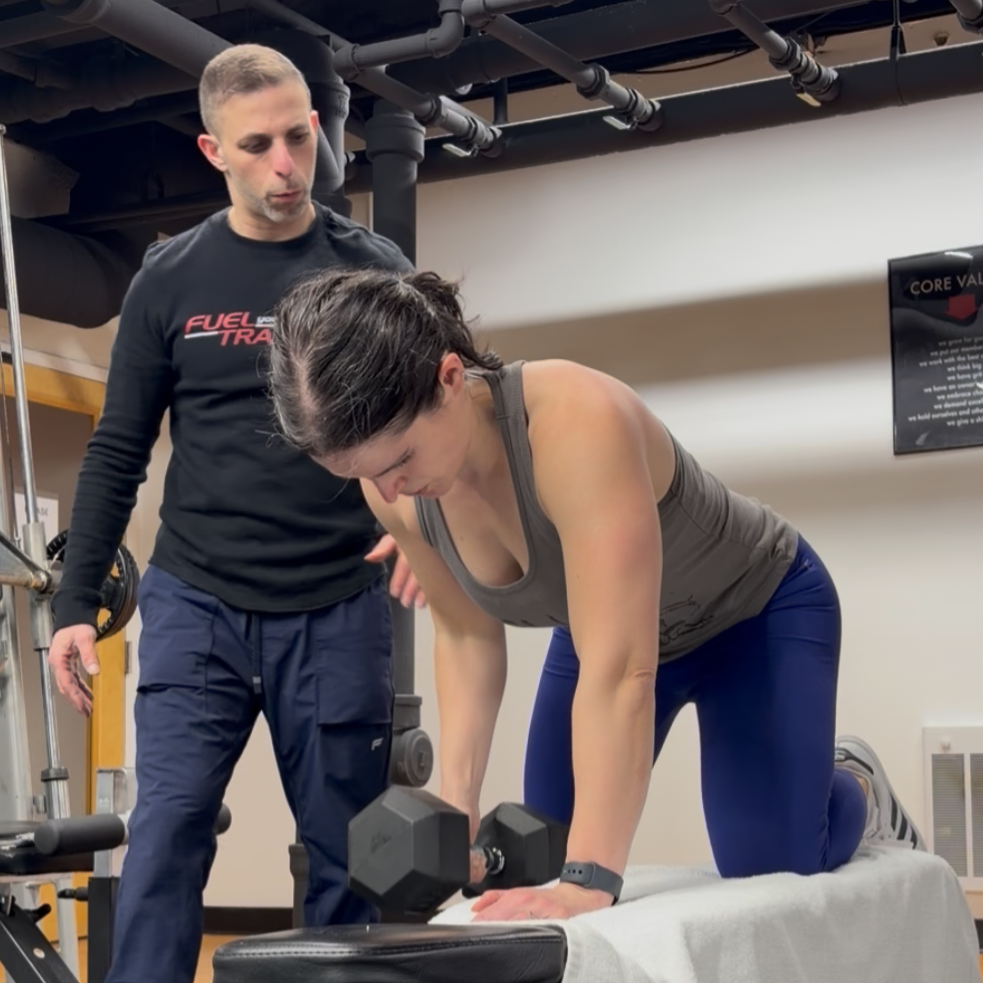
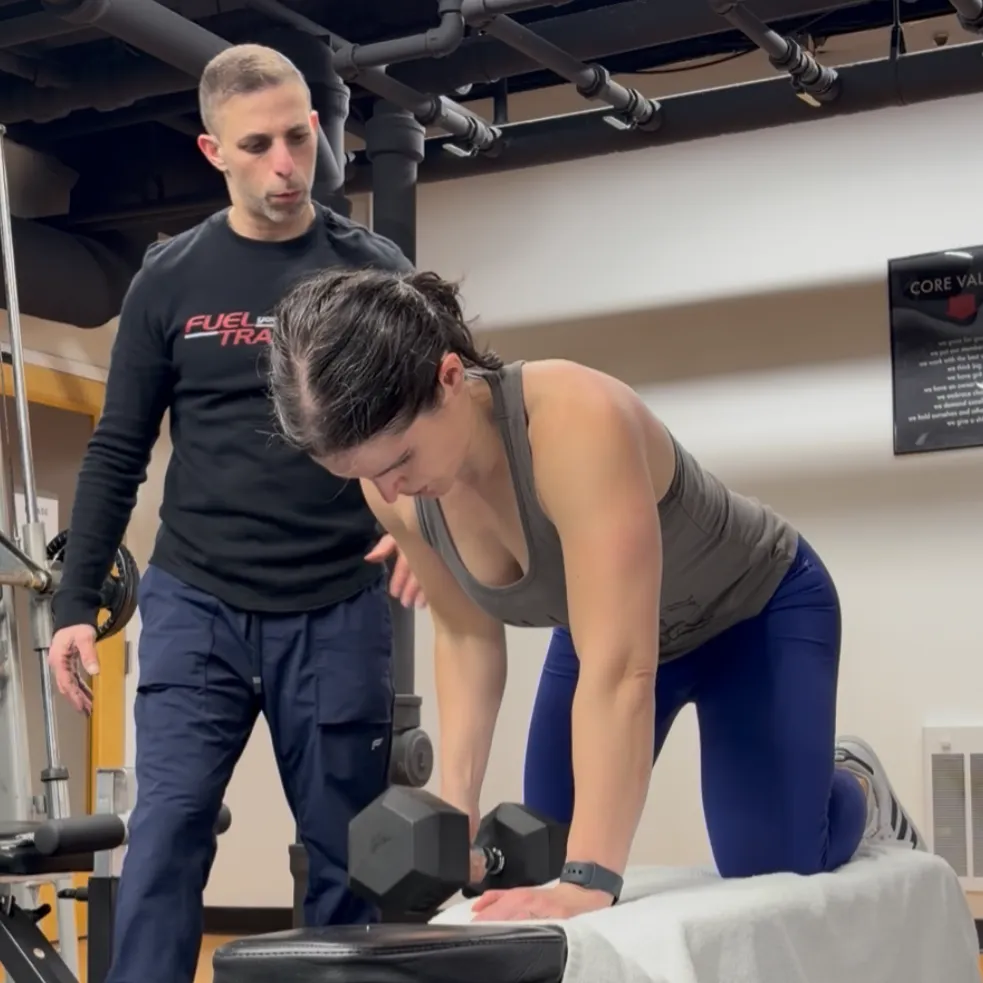
A supported hip exercise at our studio at 1430 Paddock Dr in Northbrook.
What tends to make it worse
- Long sitting: A desk day or a long drive on the Edens can leave the nerve irritated by evening.
- Heavy bending under load: Deadlifts, good mornings, and loaded toe touches are risky while symptoms are active. Many people return to them later, with a coach, once the nerve has calmed.
- Fast twisting: Golf swings, kettlebell swings, and rotational classes put sudden demands on the spine.
- Aggressive stretching: Pulling hard on a hamstring can tug on an already irritated nerve. A stretch that sends pain down the leg is not helping.
- Pushing through pain: "No pain, no gain" is bad advice here. Pain that spreads or lingers is information.
💡 Pro Tip: Judge an exercise by how you feel the next morning, not during the set. If leg symptoms are worse the next day, the dose was too high.
Where a coach fits
A personal trainer does not diagnose sciatica and does not treat it. That is your physician's and physical therapist's job. Our role comes after.
Plenty of people finish physical therapy feeling better but unsure what is safe. They stop doing anything, and the back gets weaker again. That gap is where we work. Johnny Barhoumeh, head coach and owner at Fuel Your Training, builds programs around your clinician's guidance and your history.
We are a private, appointment-only studio in Northbrook. You are not sharing a crowded floor, and your coach knows which movements to leave out. Your first visit is a free intro session where we talk through your history and watch you move. Bring any notes from your doctor or therapist.
What a first month often looks like
Every plan is different, and this is only a sketch. Early sessions focus on positions and movements that feel safe. We test one thing at a time so we know what helped and what did not. Loads stay light at first. Walking and daily habits matter as much as the work in the studio.
Over the following weeks we add load slowly. Hips and legs usually progress first. Anything that brings symptoms back gets dropped or changed. If your leg symptoms worsen at any point, we pause and send you back to your clinician.
This is slower than most people want. It is also how you avoid a setback that costs you a month.
Summary
- Get cleared first: Sciatica has several causes, and the right exercise depends on yours.
- Keep moving gently: Short walks and position changes usually beat long rest.
- Build the hips and core: Strength you can control takes pressure off the back.
- Avoid the usual triggers: Long sitting, heavy bending, fast twisting, and hard stretching.
- Use a coach after therapy: Training picks up where treatment leaves off. It does not replace it.
Frequently asked questions
Is exercise good for sciatica?
For many people, yes. Gentle, controlled movement often helps more than bed rest. But the right exercise depends on what is irritating the nerve, so get your doctor or physical therapist to clear you first.
Should I stretch or strengthen with sciatica?
Both can have a place, and the mix depends on your case. Your physical therapist can tell you which one your body needs right now. A coach then builds strength around that guidance.
What exercises should I avoid with sciatica?
Anything that sends pain down the leg, makes numbness or tingling worse, or leaves you worse the next day. Heavy loaded bending and fast twisting are common culprits.
When should I see a doctor about sciatica?
See a doctor if the pain is severe, keeps getting worse, or lasts more than a few weeks. Get urgent care for leg weakness, numbness in the groin, or loss of bladder or bowel control.
Can a personal trainer help with sciatica?
A trainer can help after your doctor or physical therapist has cleared you to exercise. A trainer does not diagnose or treat sciatica. The role is to build strength and confidence once treatment has done its job.
Ready to move with confidence again?
If your doctor or therapist has cleared you to exercise, book your free intro session or call us at (312) 735-1010. We serve Northbrook, Glenview, Northfield, Deerfield, Wilmette, and the greater North Shore.