Personal Training for Chronic Back Pain
By Johnny Barhoumeh
Back Pain, Strength Training, Northbrook
Personal Training for Chronic Back Pain: How a Coach Fits In After Your Doctor and Physical Therapist
If your back has hurt for months or years, a good personal trainer can help you build the strength to move with less fear, once your doctor or physical therapist has cleared you to train. Our one-on-one personal training in Northbrook is built for exactly that situation.
You have probably tried the usual things. Rest, stretching, a few rounds of physical therapy, maybe an injection or a new chair. Some of it helped for a while. Now you want to get stronger, but every gym program seems written for someone with a healthy back. This post explains what to look for in a trainer, what a sensible first month looks like, and where a trainer's job ends.
This article is educational and not medical advice. Consult your physician or physical therapist before starting any exercise program.
What a trainer can and can't do for your back
A trainer does not diagnose pain. A trainer does not treat a disc, a nerve, or a joint. That is your physician's job and your physical therapist's job, and we say so on day one.
What a trainer can do is take the plan your clinicians gave you and turn it into steady, progressive strength work. Many people finish physical therapy with a handful of exercises and no clear next step. They are told to "stay active." Then they stand in a big gym and have no idea what that means.
That gap is where we work. At Fuel Your Training, we think of ourselves as the step after physical therapy, not a replacement for it.
📌 Key Takeaway: Your doctor and physical therapist decide what is safe for your back. Your trainer builds the strength program inside those limits.
Before your first session
Get clearance first. Ask your physician or physical therapist three plain questions:
- Is strength training okay for me right now? Most clinicians say yes in some form, but you need to hear it for your own back.
- Is there anything I should avoid? Some people are told to limit bending under load, deep twisting, or certain ranges of motion. Write down exactly what you hear.
- Can I share your notes with my trainer? With your permission, a short note from your therapist makes the first session far more useful.
Then bring that information to a coach who will actually use it. A trainer who ignores your history and hands you a generic workout is not the right fit, no matter how good the studio looks.
What to look for in a trainer
Chronic back pain makes the choice of coach matter more than usual. Here is what we would want if it were our own back:
- Time to listen. The first session should be mostly questions. How long has it hurt? What makes it worse? What did your therapist tell you? What do you want to be able to do again?
- Individual programming. Your plan should be written for you. If everyone in the room is doing the same workout, it was not written for your back.
- Willingness to say "not today." Some days your back will be worse. A good coach changes the plan without making you feel like you failed.
- Respect for your clinician. Your trainer should be glad to work alongside your physical therapist, not compete with them.
- No hype. Anyone promising to "fix" your back is selling something. Be careful with them.
⚠️ Warning: Sharp pain, pain that travels down a leg, numbness, tingling, or weakness are reasons to stop and call your doctor. Do not train through them.
What a first month can look like
Every person is different, so treat this as an outline, not a prescription. Your own program depends on your history and your clinician's guidance.
Week one: learn how you move
We start with a conversation and a simple movement check. We watch how you stand up from a chair, how you hinge at the hips, how you carry a light weight, and how you breathe under effort. We are looking for what feels easy, what feels guarded, and where you hesitate. The first workouts are light on purpose.
Weeks two and three: build a base
Most people with a long history of back pain have gotten used to avoiding certain movements. Over time that avoidance can leave the hips, legs, and trunk weaker than they need to be. We work on those areas with simple patterns: sitting down and standing up, carrying, pushing, pulling, and stepping. Loads stay modest. We add a little at a time, only when the last session felt good.
Week four: review and adjust
By the end of the first month, we check in. Is daily life easier? Are you sleeping better? Did any session cause a setback? We adjust the plan from there. Progress with a chronic problem is rarely a straight line, and we plan for the bumps.
💡 Pro Tip: Keep a short note after each session: how your back felt before, during, and the next morning. That record helps us, and it helps your physical therapist too.
Why a private studio helps
Our studio at 1430 Paddock Dr in Northbrook is private and appointment only. That matters when your back is a concern. There is no crowded floor, no waiting for a rack, and no one watching you try a new movement. Your coach knows your history and stays with you for the whole session.
Some clients prefer one-on-one coaching. Others do well in a semi-private session of two to four people, which starts at $50 per session. If you want to see how we handle another joint-related situation, read our post on working with a personal trainer when you have arthritis. The same approach applies: clearance first, individual plans, slow progression.
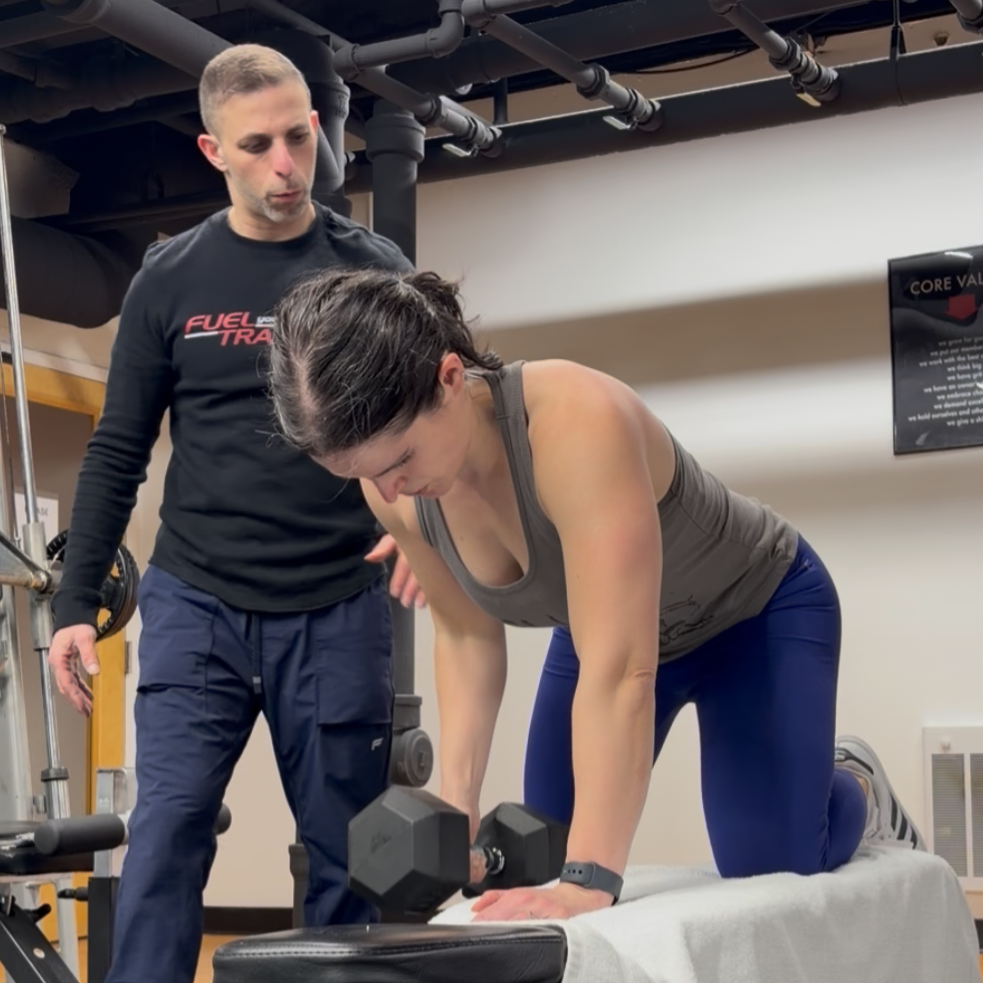
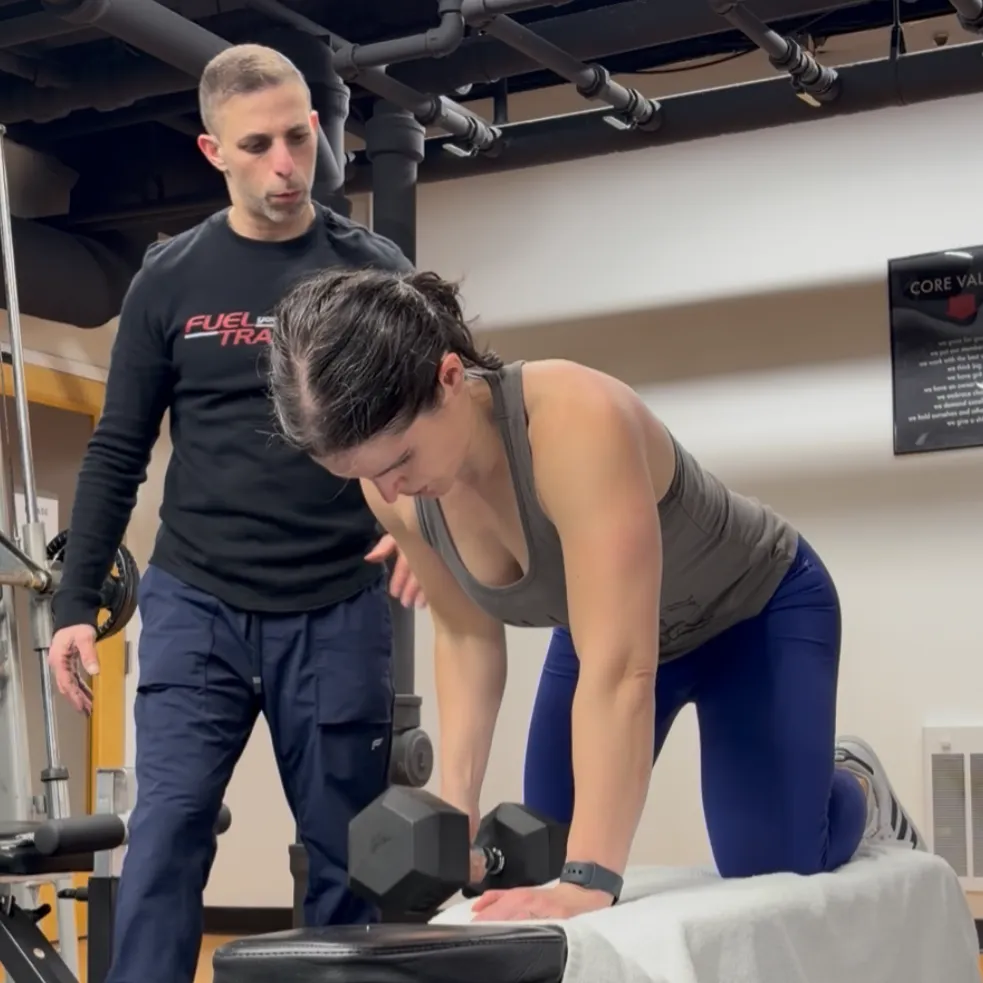
One-on-one coaching at Fuel Your Training, 1430 Paddock Dr, Northbrook.
Who this is not for
We are honest about fit. Personal training is not the right first step if you have a new injury, a recent flare you have not had checked, or symptoms your doctor has not looked at yet. See your physician first. If your clinician advises against exercise for now, follow that advice, and come see us when you are cleared.
It is also not a quick fix. Strength work helps most when you do it consistently over months. If you want a two-week answer, we are not it.
Summary
- Clearance comes first. Talk to your physician or physical therapist before you start.
- A trainer is the step after PT. We build strength inside the limits your clinicians set. We do not diagnose or treat.
- Start light and go slowly. The first weeks are about learning how you move and building a base.
- Pick a coach who listens. Individual plans, honest answers, and respect for your care team matter more than any promise.
- Watch for red flags. Sharp pain, leg pain, numbness, or weakness mean stop and call your doctor.
Book a free intro session in Northbrook
If your clinician has cleared you to train and you want a coach who will take your back seriously, come in for a free intro session. We will talk through your history, look at how you move, and tell you plainly whether we are the right fit. Book your free intro session here or call us at +1 312 735 1010. We serve Northbrook, Glenview, Northfield, Deerfield, Wilmette, Winnetka, Glencoe, Highland Park, and the greater North Shore.