Working Out With Knee Arthritis: What Actually Helps
By Johnny Barhoumeh
Knee Arthritis, Strength Training, Northbrook
Working Out With Knee Arthritis: What Actually Helps, What Gets in the Way, and Where a Coach Fits
Most people with knee arthritis do better with regular, well-chosen strength work than with rest, and a coach who understands the joint can make that work feel safe. If you want that kind of help in Northbrook, our one-on-one personal training is built around exactly this.
You have a knee that aches on stairs, stiffens after a long drive, or complains when you stand up from a low chair. So you stopped doing the things that hurt. Now the knee feels weaker, and you are not sure what is safe to try. That loop is common, and it is worth breaking carefully.
This article is educational and not medical advice. Consult your physician or physical therapist before starting any exercise program.
Is it safe to work out when your knees have arthritis?
For many people, yes, with the right plan. But "many people" is not "everyone," and your knee is not the same as the next person's. Arthritis can mean worn cartilage, an old meniscus tear, swelling that comes and goes, or all three. Your doctor knows which one you have. A trainer does not.
That is why the first step is a conversation with your physician or physical therapist. Ask them three things: which movements to avoid, how much pain is acceptable during exercise, and what symptoms mean you should stop and call. Bring their answers to your first session.
⚠️ Warning: Stop and contact your doctor if you notice sudden swelling, a hot or red knee, pain that wakes you at night, numbness, or a knee that gives way under you. Do not train through those.
Why do knees with arthritis often get worse when you stop moving?
A knee that does less usually gets stiffer, and the muscles around it get weaker. Weak thigh and hip muscles leave the joint doing more of the work on its own. Many people notice that stairs and getting out of a car feel harder after a few months of avoiding activity.
This does not mean you should push through pain. It means the goal of a good program is to rebuild the support around the knee in small, controlled steps.
What should training look like with knee arthritis?
A sensible program changes the load, the range, and the pace before it changes anything else. Here is what we look at with a client who has knee arthritis, once their medical team has cleared them to train.
- Range of motion you can control: We work in the range where your knee feels steady. A box squat to a chair that is the right height is often a better start than a deep squat to the floor.
- Hip and thigh strength: Glutes, hamstrings, and quads all share the job of supporting the knee. We train them with movements like bridges, step-ups to a low box, and supported leg presses.
- Slow tempo: Lowering a weight over three or four seconds builds strength without the jarring that fast reps can add.
- Low-impact conditioning: A bike or a slow walk before and after lifting keeps the joint warm without pounding it.
- Weight you can repeat: Most sets should end with a rep or two still in the tank. Grinding out a last rep on a sore knee is not a goal.
💡 Pro Tip: Judge a session by how your knee feels the next morning, not during the workout. A little muscle fatigue is normal. Joint pain that is clearly worse a day later means the load was too much, and we adjust it next time.
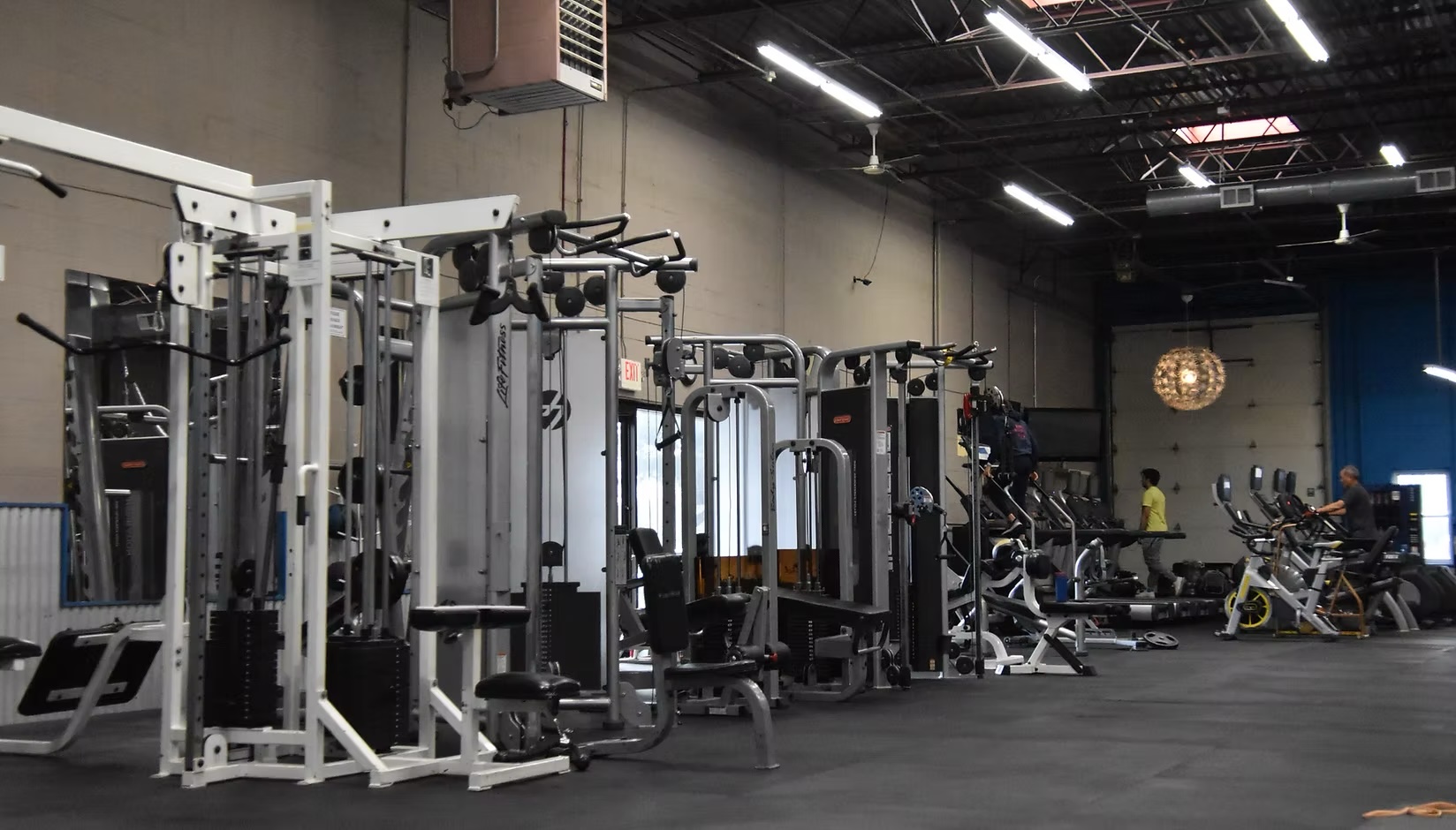
The training floor at 1430 Paddock Dr in Northbrook. Appointment only, so the equipment is free when you arrive.
Which exercises tend to cause problems for sore knees?
It depends on the person. These are the ones we approach carefully, and sometimes skip for a while:
- Deep lunges and full squats: They put a lot of bend through the knee. We usually build up to them, or find a shallower version that works.
- Jumping and fast landings: Box jumps and jump rope can stay on the shelf until your knee tells us otherwise.
- Heavy leg extensions: The machine can load the front of the knee hard. We use it lightly, if at all.
- Twisting on a planted foot: Pivoting while the foot is stuck to the floor is hard on the joint. We keep the feet moving.
None of these is banned for all time. They are movements we earn our way back to, based on how you respond.
Where does a coach stop and your medical team start?
Your physician diagnoses. Your physical therapist treats and rehabilitates. We do neither. We are the step after physical therapy, or alongside your medical care when your doctor agrees: we turn "you are cleared to exercise" into a plan you can keep doing.
We do not diagnose your knee, prescribe a rehab protocol, or claim that training will treat or heal arthritis. What we can do is coach you through strength work that your medical team has approved, watch how your knee responds, and change the plan when it needs changing.
📌 Key Takeaway: Get clearance first, start lighter than you think you need to, and let a coach progress you slowly. Consistent, modest strength work usually beats occasional hard efforts for a painful knee.
Is one-on-one or semi-private training better for knee arthritis?
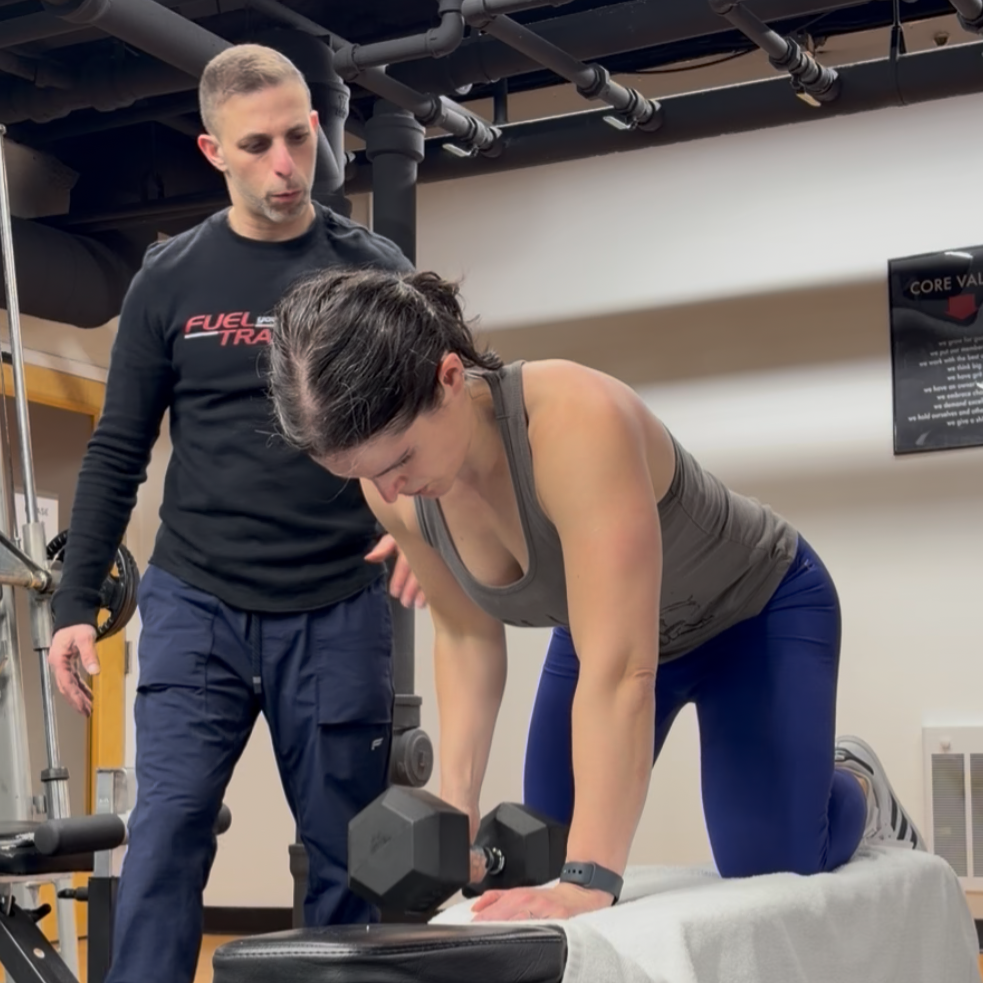
Early on, one-on-one tends to be the better fit. Your coach watches every rep and can change a movement on the spot. That matters when your knee has a bad day.
Once you know your own limits, semi-private sessions (two to four people, starting at $50 per session) can work well. You still get a coach's eyes on your form, and many people like training next to someone. We will tell you honestly which one suits you after your free intro session. For more on how a coach handles joint pain in general, read our post on working with a personal trainer when you have arthritis.
What happens in a first session at our Northbrook studio?
You meet Johnny Barhoumeh, our head coach, and you talk. We ask about your knee, your history, what your doctor or therapist said, and what you want to do again, whether that is stairs, golf, or keeping up with grandchildren. Then we watch you move: a sit-to-stand, a step-up, a short walk. We pick a starting load that feels easy, and you leave knowing what the next few weeks look like. There is no pressure to sign up.
Our studio is private and appointment only, at 1430 Paddock Dr. We train adults from Northbrook, Glenview, Northfield, Deerfield, Wilmette, Winnetka, Glencoe, and Highland Park.
Summary
- Clearance first: Talk to your physician or physical therapist before you start, and ask what to avoid.
- Build the support: Strong hips and thighs share the load with the knee.
- Control the load: Use a range you can manage, a slow tempo, and weights you can repeat.
- Watch the next morning: Joint pain that is worse a day later means ease off.
- Know the limits of coaching: We follow your medical team's guidance. We do not treat arthritis.
Ready to talk it through?
Book your free intro session or call us at (312) 735-1010. Bring what your doctor or therapist told you, and we will start from there.