Your PT Discharged You. Now What?
By Johnny Barhoumeh
Physical Therapy, Strength Training, Northbrook
Your PT Discharged You. Now What? How to Keep Building Strength After Physical Therapy Ends
Your physical therapist said you're done, and nobody explained what comes next. The usual answer is a coached strength program, and semi-private training in Northbrook is one way to get it.
The last session usually feels good and a little scary. For weeks someone watched every rep. Now you have a printed sheet of exercises and a vague sense that you should "stay active." Most people we talk to at the studio on Paddock Drive describe the same thing: they feel better, but they don't trust the injured area yet, and they have no plan.
This article is educational and not medical advice. Consult your physician or physical therapist before starting any exercise program.
Why does physical therapy end before you feel strong?
Physical therapy has a specific job. Your therapist works to get you moving, reduce pain, and meet the goals that insurance and your doctor agreed on. When you hit those goals, the sessions stop. That is the system working as designed.
It does not mean you are as strong as you were before the injury or surgery. Meeting a discharge goal and being ready for stairs, groceries, golf, or grandkids are different things. The gap between the two is where many people stall, or reinjure themselves by doing too much too fast.
What should you do in the first week after discharge?
Keep doing your home exercises. Many people drop them the day therapy ends. Don't. They are the bridge between the clinic and whatever comes next.
Then ask your therapist a few direct questions before you leave:
- What should I avoid for now? Ask for specific movements, loads, or positions, and for how long.
- What pain is normal and what is a warning? Get a clear line you can use on your own.
- Can I have a copy of my discharge notes? Any good coach will want to read them.
- Who should I check in with if something flares up? Know your next call before you need it.
📌 Key Takeaway: Discharge is a handoff, not a finish line. Walk out with written answers, not just a good feeling.
Where does a strength coach fit in?
A coach picks up where therapy stops. Your PT restored basic function. A coach builds capacity on top of it, with heavier loads, more variety, and a plan that gets harder in small steps over months.
We are not a replacement for physical therapy, and we don't treat injuries. We don't diagnose anything either. What we do is teach you to lift well, watch how you move, and adjust the work around the area you are protecting. Johnny, our head coach, starts every new client with a conversation about history before anyone touches a weight. If your doctor or therapist has restrictions, they set the boundaries and we program inside them.
If you want a closer look at that handoff, we wrote about it in strength training after physical therapy.
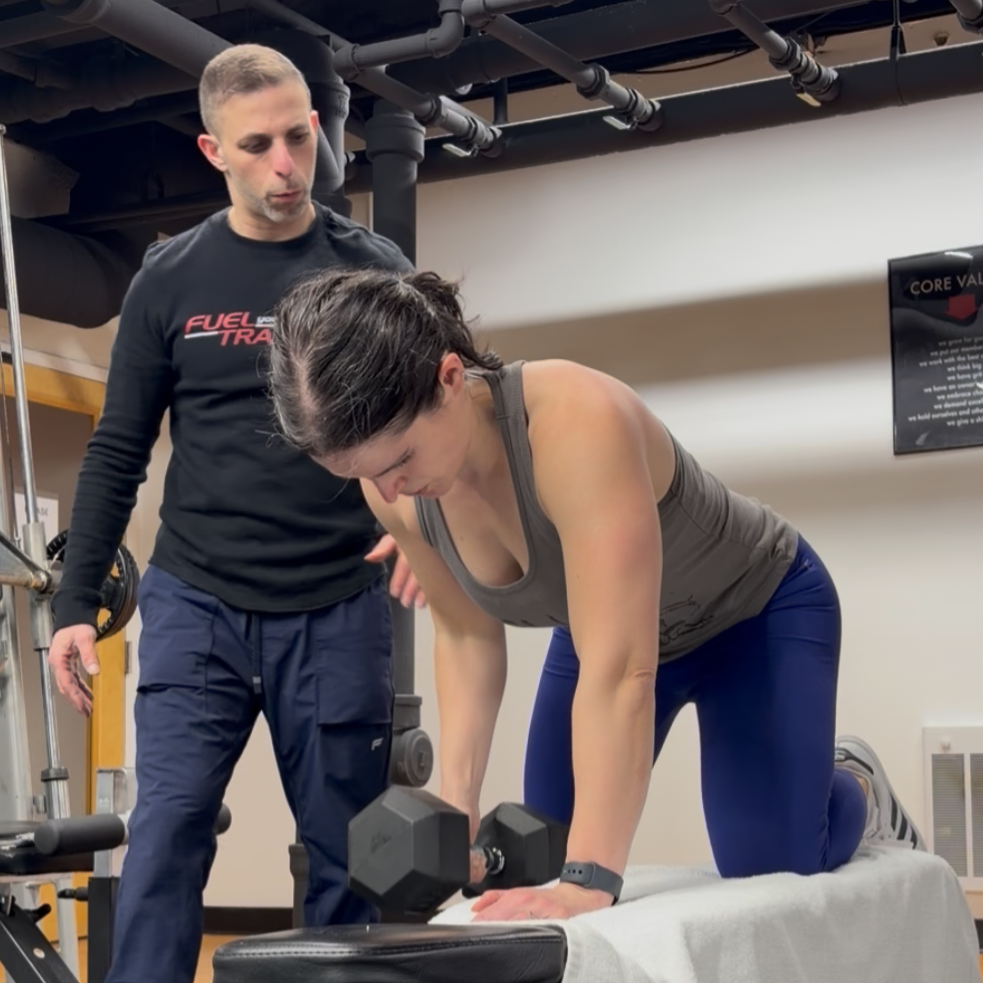
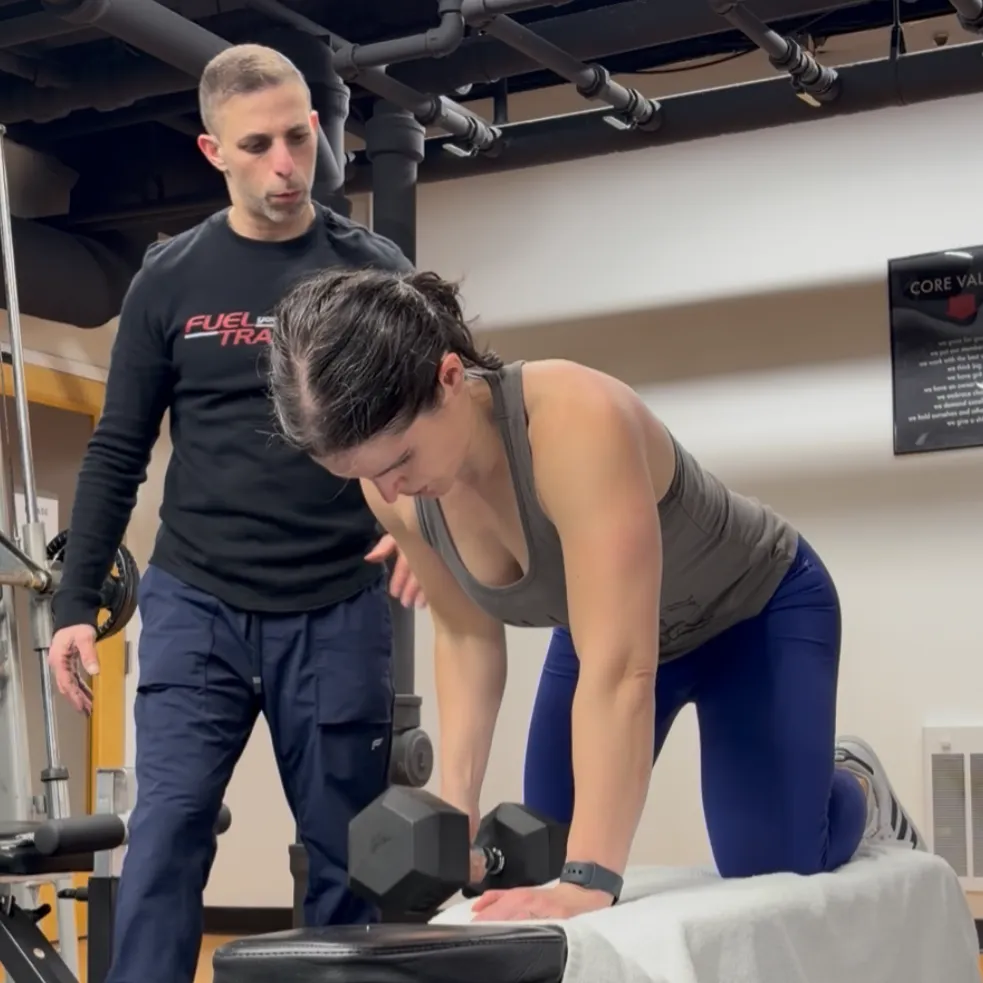
A coach adjusts the load and the setup so the client can build strength with control.
What does the first month of coaching look like?
Weeks one and two: learn the basics
Expect light weights and a lot of talking. You learn how to squat, hinge, push, pull, and carry with good position. The goal is confidence, not fatigue. If a movement bothers you, we change it that day.
Weeks three and four: add load slowly
Once the movements look steady, weight goes up in small jumps. You will probably feel muscle soreness, which is different from joint pain. We teach you to tell them apart, and you report what you feel after each session so the next one can be adjusted.
💡 Pro Tip: Two sessions a week is plenty to start. More isn't better when your body is still adapting.
Is semi-private training a good fit after PT?
It depends on you. Semi-private sessions have two to four people and start at $50 per session. You still get a coach who knows your history and watches your form. Many people like having others in the room because it keeps them consistent.
Choose one-on-one if you are still guarded about a specific joint, need frequent changes, or just prefer privacy. Choose semi-private if you have clearance for general strength work and want the lower cost. We will tell you honestly which one we think fits at your free intro session. We don't publish a one-on-one price here, so call the studio and we will go through it.
⚠️ Warning: Do not restart your old routine at your old weights. Tissue that has been healing needs a gradual return, and the most common setback we see is people doing too much in the first two weeks.
Who is this not for?
If you are still in pain with daily activities, or your therapist hasn't cleared you for resistance work, wait. Go back to your doctor first. Strength training is a good next step for many people, but it is not the right move for everyone on the day they are discharged.
Summary: what to remember after PT ends
- Keep your home exercises: They carry you until you start a stronger program.
- Get clearance in writing: Ask your physician or therapist what is safe and what to avoid.
- Bring your discharge notes: A coach should read them before the first session.
- Start light and build slowly: The first month is about movement quality and confidence.
- Pick the format that fits: One-on-one for more attention, semi-private for lower cost.
Ready to take the next step after physical therapy?
Come in for a free intro session at 1430 Paddock Dr in Northbrook. Bring your discharge notes and your questions. Book your free intro session or call us at +1 312 735 1010.