What to Do After Physical Therapy Ends
By Johnny Barhoumeh
Physical Therapy, Strength Training, Northbrook
What to Do After Physical Therapy Ends: Building Strength That Lasts
When your physical therapist signs off, the next step is a strength program that keeps building on what you gained. A coach who works with you one-on-one can pick up where the clinic leaves off.
Many people finish their last PT visit feeling better and a little lost. The appointments are over. The hand-holding is over. You have a sheet of exercises and no clear idea what comes next. This post is about that gap.
This article is educational and not medical advice. Consult your physician or physical therapist before starting any exercise program.
Why does progress stall when PT ends?
Physical therapy has a specific job. It gets you out of pain and back to basic function. Insurance often pays for a set number of visits, and the goal is "able to do daily activities," not "strong."
That is a fair goal, but it leaves you at the bottom of a ladder. You can walk, reach, and bend again. You are not yet strong enough to handle the next fall on the ice, a long day in the garden, or a trip with heavy luggage. The weakness that was there before the injury is often still there too.
We see this at our studio on Paddock Drive all the time. A client arrives six weeks after discharge. The pain is gone, but they avoid anything that feels like the old problem. They stop lifting, stop twisting, and slowly stop doing things they enjoy.
📌 Key Takeaway: Being discharged means you passed the clinical goal. It does not mean you are done getting stronger.
What should you do before your last PT visit?
Use the final sessions to gather information. Your therapist knows your body better than anyone right now. Ask these questions while you still can:
- What movements should I still avoid? Get specifics, such as a weight limit or a range you should not push past yet.
- What are my weak spots? A therapist can tell you which side is slower, which joint is guarded, and which muscles need work.
- Which exercises from my sheet should I keep doing? Some are warm-ups. Some are the real work.
- Are you comfortable with me working with a trainer? Ask for a short note or a quick call with the coach if they are willing.
- What symptoms mean I should stop and call you? Sharp pain, numbness, swelling, or a sudden change are common ones, but let your therapist define yours.
💡 Pro Tip: Take a photo of your exercise sheet and write down your therapist's answers the same day. You will forget the details within a week.
Where does a personal trainer fit in?
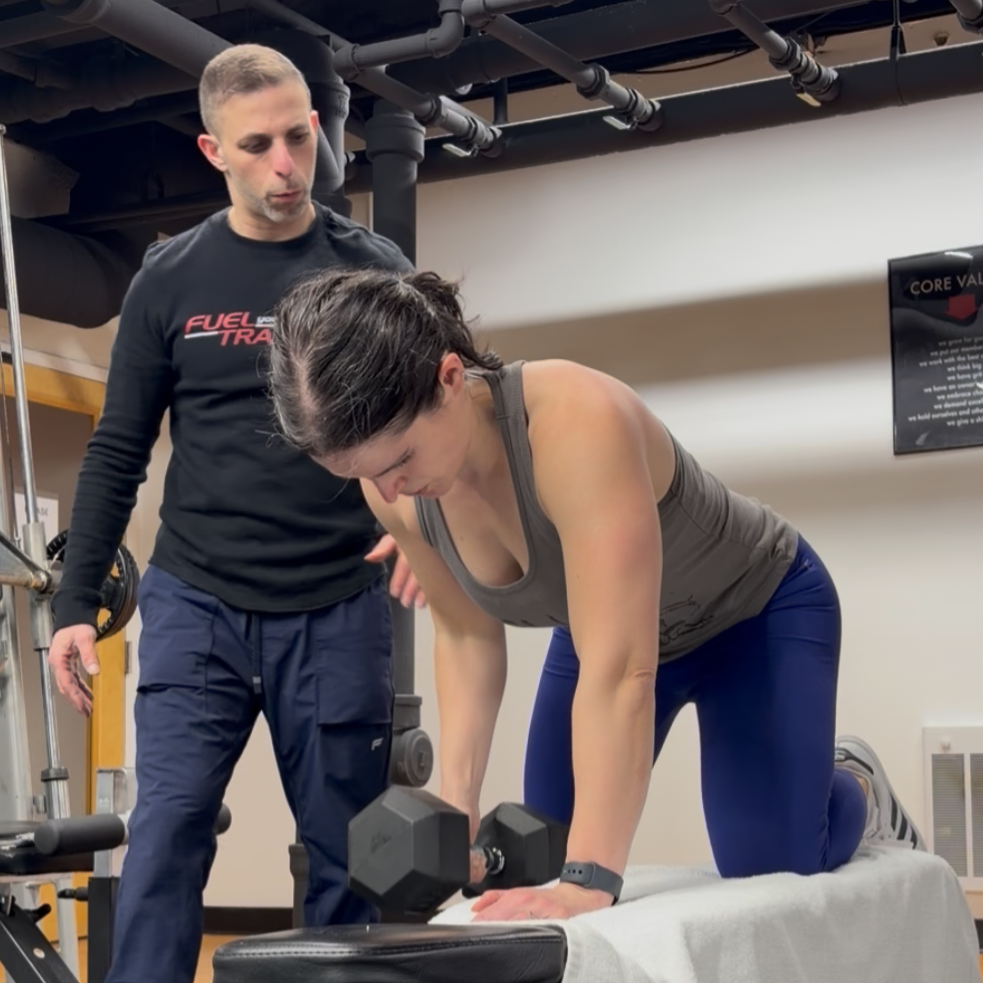
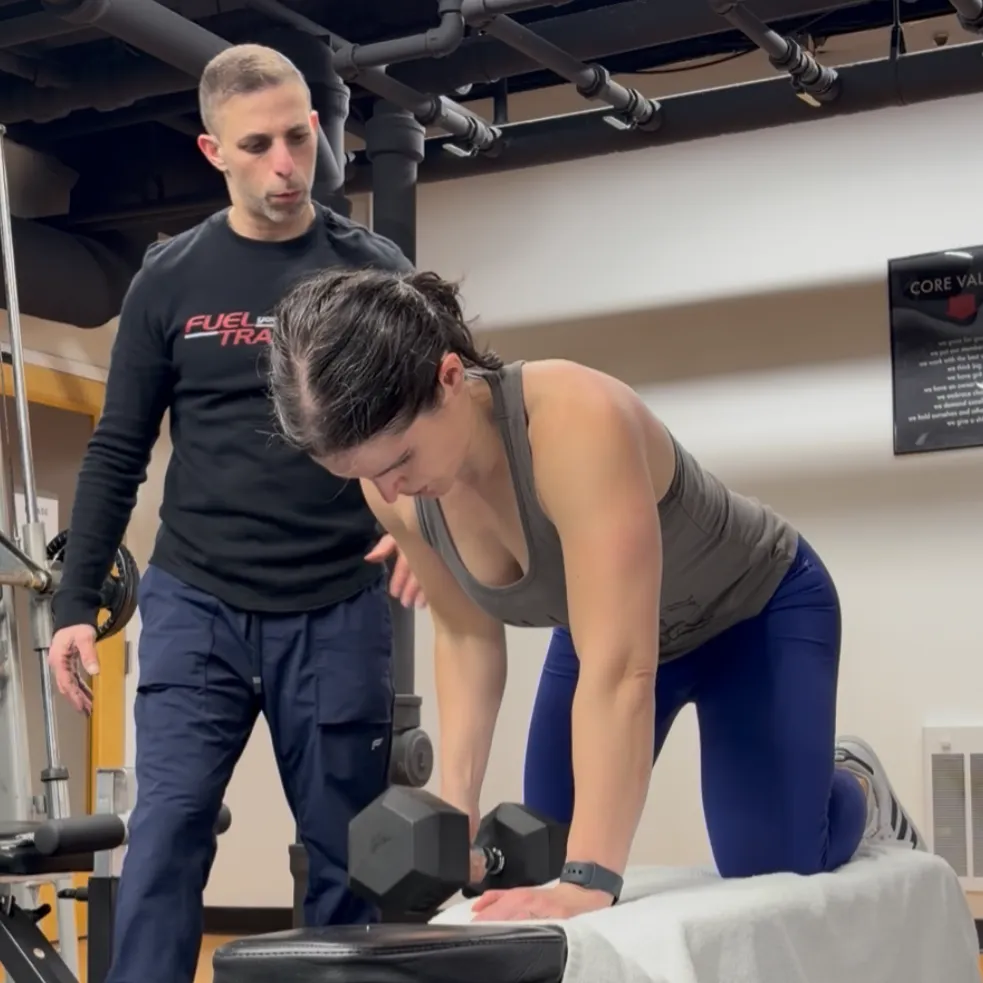
A trainer is the step after physical therapy, not a replacement for it. Your therapist treats the problem. A coach builds the strength, confidence, and habits that make the problem less likely to come back.
A good coach for this stage does a few things:
- Reads your history first. Before any exercise, we talk through your diagnosis, your surgery or injury dates, and what your therapist told you.
- Starts lighter than you expect. The first sessions check how you move under a small load. We add weight slowly and only when the movement stays clean.
- Works around the sore spot. If your shoulder is guarded, your legs and back still train. Nobody needs to sit out.
- Keeps notes. Each session builds on the last one, so progress is not a guess.
A coach does not diagnose, treat, or rehabilitate an injury. If something new hurts, we stop and send you back to your physician or therapist.
One-on-one coaching at Fuel Your Training, 1430 Paddock Dr, Northbrook.
What does the first month of training look like?
Every client is different, so treat this as a rough picture rather than a rule.
Week one: the conversation and the movement check
We start with a free intro session. Johnny, our head coach, asks about your history and your goals. Then we watch you do simple movements like a sit-to-stand, a hip hinge, and a light push and pull. We are looking at how you move, not at how much you can lift.
Weeks two and three: the basics, done well
Most people do a few core patterns: squat or sit-to-stand, hinge, push, pull, and carry. Loads are modest. The point is to groove clean movement and learn what feels good and what feels off.
Week four: adding load
If the movement is steady and you are not flaring up, we start to add weight in small steps. This is where many people notice something new. They carry groceries without thinking about it, or they get off the floor more easily.
⚠️ Warning: Do not skip ahead because you feel good. Feeling good after PT is the exact moment people do too much and set themselves back. Progress should feel boring for a while.
Is this right for everyone?
No. If you are still in pain with daily tasks, or your therapist has not cleared you for general exercise, wait. Go back to them first. If you prefer to exercise alone and already have a sound plan, you may not need a coach at all.
It tends to fit people who want a guide for the next phase. That includes adults who were told to "stay active" and are not sure what that means, and people who are nervous about re-injury. It also suits people who simply want someone watching their form. If you want to train with a partner or two, our semi-private vs personal training guide explains the difference. For a look at how this plays out with a specific condition, read our post on strength training with a herniated disc.
What should you remember?
- PT gets you functional. Strength training makes you resilient, and that takes longer.
- Ask your therapist questions before discharge. Get limits, weak spots, and warning signs in writing.
- Start lighter than your ego wants. Slow progress holds up better than fast progress.
- Keep your medical team in the loop. A coach works alongside them, never in place of them.
Ready to take the next step after PT?
Book a free intro session at our private studio in Northbrook. We will talk through your history, check how you move, and tell you honestly whether coaching makes sense for you right now. Book your free intro session or call us at (312) 735-1010.