Getting Strong Again After Rotator Cuff Surgery
By Johnny Barhoumeh
Rotator Cuff, Shoulder Strength, Northbrook
Getting Strong Again After Rotator Cuff Surgery: What Comes After Physical Therapy
Once your surgeon and physical therapist clear you, a coach can help you rebuild shoulder strength with one-on-one personal training in Northbrook. The key word is "after." Training picks up where rehab leaves off.
Rotator cuff surgery is a long road. You wore a sling, you did your exercises, you went to appointments. Then your therapist signed off, and you were handed a folder of handouts and a goodbye. Your shoulder moves again. It does not feel strong, and you are not sure what is safe to try on your own.
This article is educational and not medical advice. Consult your physician or physical therapist before starting any exercise program.
Why Does the Shoulder Feel Weak After Rehab Ends?
Physical therapy has a specific job. It protects the repair, restores range of motion, and gets you back to daily tasks like dressing, reaching a cabinet, and driving. That work matters, and it comes first.
Strength is a different goal. Getting back to lifting a grocery bag overhead, carrying a suitcase through O'Hare, or picking up a grandchild takes more load than most rehab programs ask for. The muscles around the shoulder have been under-used for months. The rest of your body has been compensating, and your back, neck, and other shoulder may have picked up habits that now need to be undone.
📌 Key Takeaway: Being discharged from physical therapy means the repair is protected and basic function is back. It does not mean your strength is back. That gap is where many people stall.
When Is It Okay to Start Training With a Coach?
That is a question for your surgeon and your physical therapist, not for us. Every repair is different. The size of the tear, the type of repair, your age, and your tissue quality all change the timeline. Your surgeon knows what they did in the operating room. We do not.
Before you book anything with a trainer, ask your surgeon and therapist:
- Am I cleared for resistance training? Get a clear yes, ideally in writing.
- Are there movements I should avoid? Overhead pressing and heavy pulling are common ones to ask about.
- Are there limits on range of motion or load? Ask for specifics you can pass along to your coach.
- Who should I contact if something feels wrong? Know the answer before the first session.
Bring those answers with you. A good coach will read them, ask questions, and work inside those limits.
What Does Coaching After Rotator Cuff Surgery Look Like?
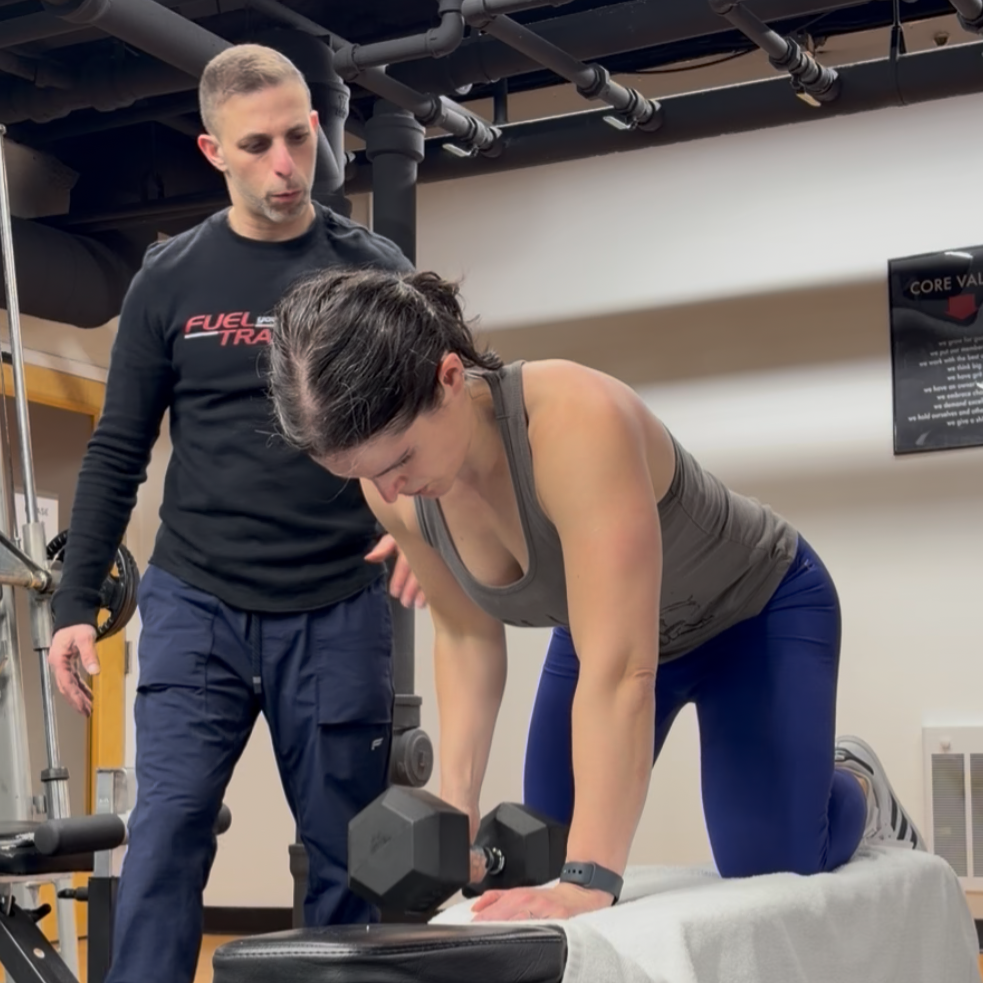
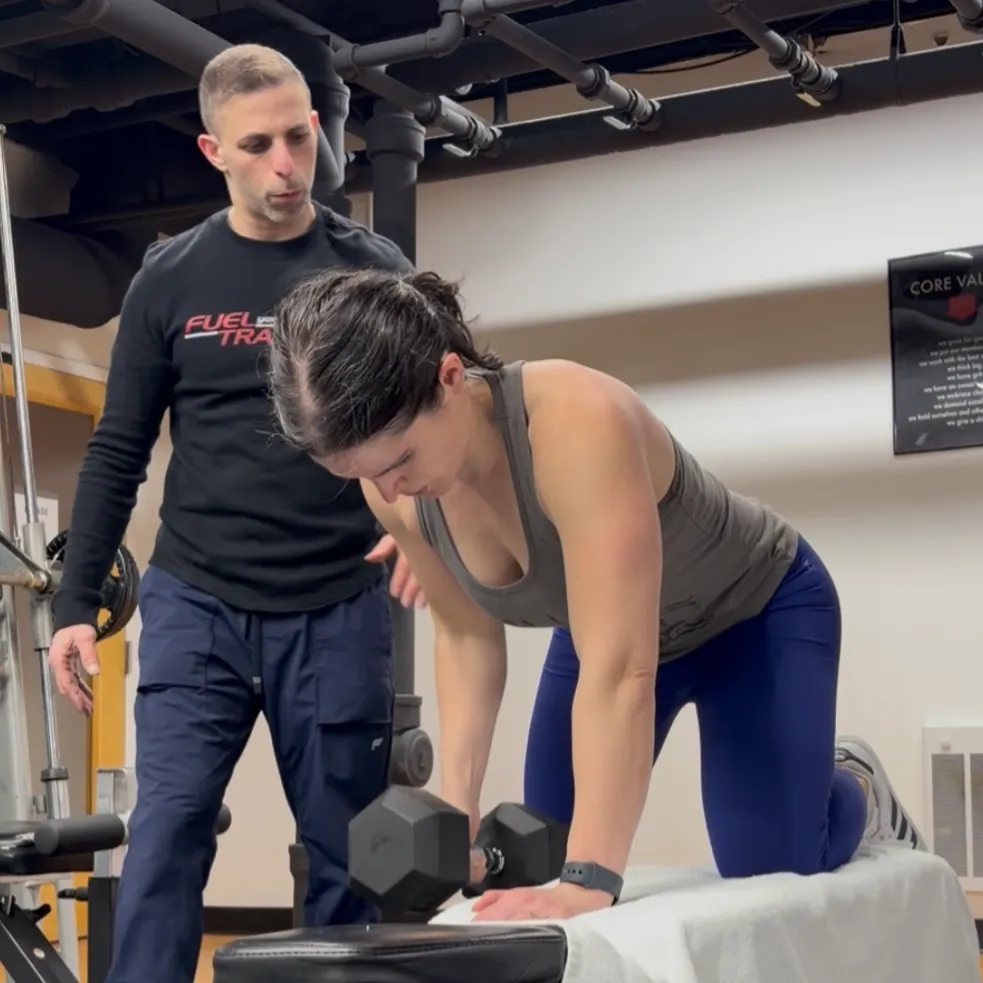
We do not prescribe rehab and we do not treat the shoulder. Our job is to help a cleared adult get stronger, move well, and feel confident again. At our private studio at 1430 Paddock Dr in Northbrook, that starts with a conversation and a movement check, not a workout.
Johnny Barhoumeh coaches adults who are coming back from injury and surgery. A first session usually covers a few things:
- Your history: what was repaired, when, what your surgeon said, and what your therapist worked on.
- How you move now: how the shoulder, upper back, and ribcage work together, and where you protect the arm without realizing it.
- What you want back: golf, swimming, pickleball, lifting a bag into the overhead bin, or sleeping through the night.
One-on-one coaching at our Northbrook studio. Loads and positions are set around your surgeon's guidance.
How Do You Build Strength Back Gradually?
Most sensible programs after shoulder surgery follow the same logic. Start with light loads, controlled tempo, and positions that feel stable. Add load slowly. Check how the shoulder responds the next day, not just during the session.
The rest of the body does a lot of the work
The shoulder does not work alone. Legs, hips, and trunk drive nearly every pushing and pulling movement. While the shoulder is still limited, there is plenty to train: squats, hinges, carries, and core work. Staying strong everywhere else keeps you from losing ground and makes the return to upper-body work smoother.
Pulling usually comes before pressing
Rows and similar pulling movements tend to be easier to control than pressing overhead. Many coaches reintroduce them first, then bring in pressing at a height and load the shoulder tolerates. Your surgeon's guidance sets the order for you.
💡 Pro Tip: Keep a short note after each session. Write down what you did and how the shoulder felt that evening and the next morning. Patterns show up quickly, and your coach and your doctor can both use that information.
Pain is information
Mild muscle fatigue is normal when you start loading again. Sharp pain, pain that lingers, or a new feeling of weakness is not. If that happens, we stop, adjust, and tell you to check in with your surgeon or therapist.
⚠️ Warning: Do not push through sharp or lasting shoulder pain to prove you are healed. A repaired tendon can be re-injured. Stop and call your medical team.
Is One-on-One or Semi-Private Better After Shoulder Surgery?
It depends on where you are. In the early weeks of training, most people do best one-on-one. The coach can watch every rep, adjust positions on the spot, and slow things down without anyone waiting. Our semi-private sessions, with two to four people, can make sense later, once your program is steady and you know what your shoulder tolerates.
If you have a knee or hip in the mix too, our post on exercise after hip replacement covers how we think about the handoff from therapy to strength work. The same principles apply.
What Should You Look for in a Trainer?
Surgery recovery is not the place to hire the cheapest or the closest option. Ask any trainer you are considering:
- Will you work with my surgeon's and therapist's guidance? The answer should be yes, with no ego attached.
- Do you plan sessions for me, or run a template? You want a program built around one shoulder, yours.
- How do you handle pain or setbacks? You want a coach who stops and refers out, not one who pushes.
If a trainer promises to fix or heal your shoulder, walk away. That is a medical claim, and it is not what a trainer does.
Summary
- Rehab comes first: your surgeon and physical therapist set the timeline. Training starts only with their clearance.
- Strength is a separate goal: being discharged from PT does not mean your shoulder is ready for everyday loads.
- Build slowly: train the whole body, bring pulling back before pressing, and watch how the shoulder responds the next day.
- Stop on sharp pain: check in with your medical team before continuing.
- Pick a coach who listens: one who follows your medical team's guidance and never claims to treat the shoulder.
Ready to Talk About Getting Strong Again?
Your first visit with us is a free intro session at our private studio in Northbrook. Bring your clearance notes and your questions. Book your free intro session or call us at (312) 735-1010.
We serve Northbrook, Glenview, Northfield, Deerfield, Wilmette, Winnetka, Glencoe, Highland Park, and the greater North Shore.