Strength Training With Scoliosis: What to Know
By Johnny Barhoumeh
Scoliosis, Strength, Northbrook
Strength Training With Scoliosis: What Adults in Northbrook Should Know Before Working With a Personal Trainer
Most adults with scoliosis can strength train, and many feel better for it, once their doctor has cleared them and their coach builds the program around their curve. That's how we approach working as a personal trainer for scoliosis clients in our one-on-one personal training at Fuel Your Training.
Maybe you were diagnosed as a teenager and told to "keep an eye on it." Maybe an X-ray for something else turned it up in your 50s. Either way, you've probably heard mixed advice. One person says avoid lifting. Another says yoga will fix it. A third tells you to ignore it. This post gives you a clearer picture of where a strength coach fits, what to ask first, and what training looks like when your spine has a curve.
This article is educational and not medical advice. Consult your physician or physical therapist before starting any exercise program.
Can You Lift Weights if You Have Scoliosis?
For most adults, yes. Exercise is a standard part of managing scoliosis in adults. The NHS guidance on adult scoliosis says activities that strengthen and stretch the back may help reduce pain, and that the most important thing is to keep your back moving with something you'll stick with.
The full answer still depends on you. A mild curve you've had since high school is a different situation from a curve that developed later in life, or from a spine that has had surgery and fusion. Your doctor knows which one you have. A coach doesn't diagnose that, and shouldn't try.
⚠️ Warning: If you have new or worsening pain, numbness or tingling in your legs, or weakness that's getting worse, see your doctor before you start training. Don't push through those symptoms.
Where a Personal Trainer Fits (and Where One Doesn't)
Think of your care in layers. Your physician or spine specialist sets the boundaries. A physical therapist handles rehab and any scoliosis-specific corrective work. Some therapists train in specific methods for this. If you want to read about them, there's a published review of the major scoliosis-specific exercise approaches.
A strength coach comes after that. Our job is to help you build general strength, stay consistent for years, and keep doing the things you care about. We work inside the limits your medical team sets. We don't treat scoliosis, and we don't try to straighten your spine.
If you've just finished physical therapy, our post on what to do after your PT discharges you walks through that handoff step by step.
Questions to Ask Your Doctor or PT First
- Movement limits: Are there positions or lifts I should avoid, like heavy weight overhead or twisting under load?
- Load limits: Is there a weight or effort level you'd want me to stay under for now?
- Warning signs: What symptoms mean I should stop and call you?
- Home exercises: Are there exercises you've given me that my coach should keep in the program?
💡 Pro Tip: Bring the answers to your first session. Better yet, bring your home exercise sheet. A good coach will build around it instead of replacing it.
What Strength Training Looks Like With a Curve
There's no single scoliosis workout. Two people with the same diagnosis can feel completely different doing the same exercise. That's why a program from the internet rarely fits. Here's how we usually start at our Northbrook studio.
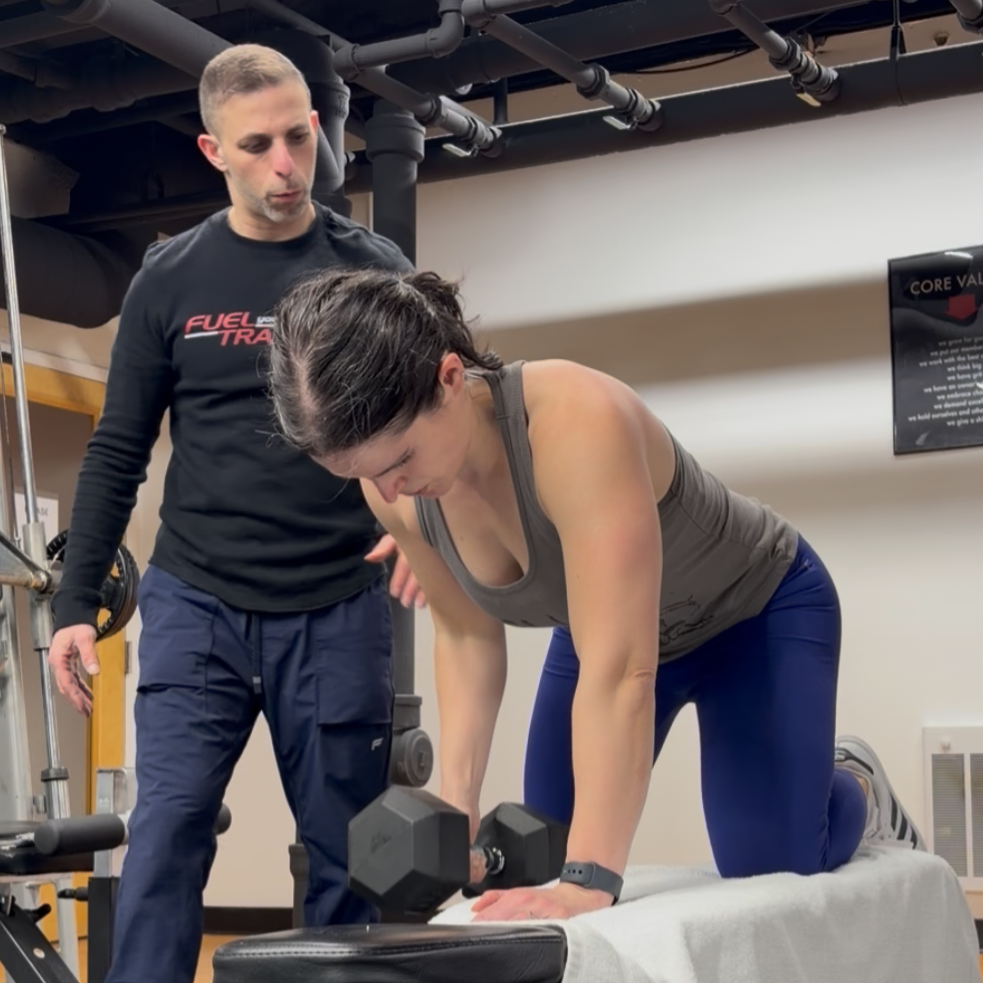
- We watch you move first: Squatting, hinging, stepping, carrying, reaching overhead. We look at what feels steady and what feels off, and we ask you more than we tell you.
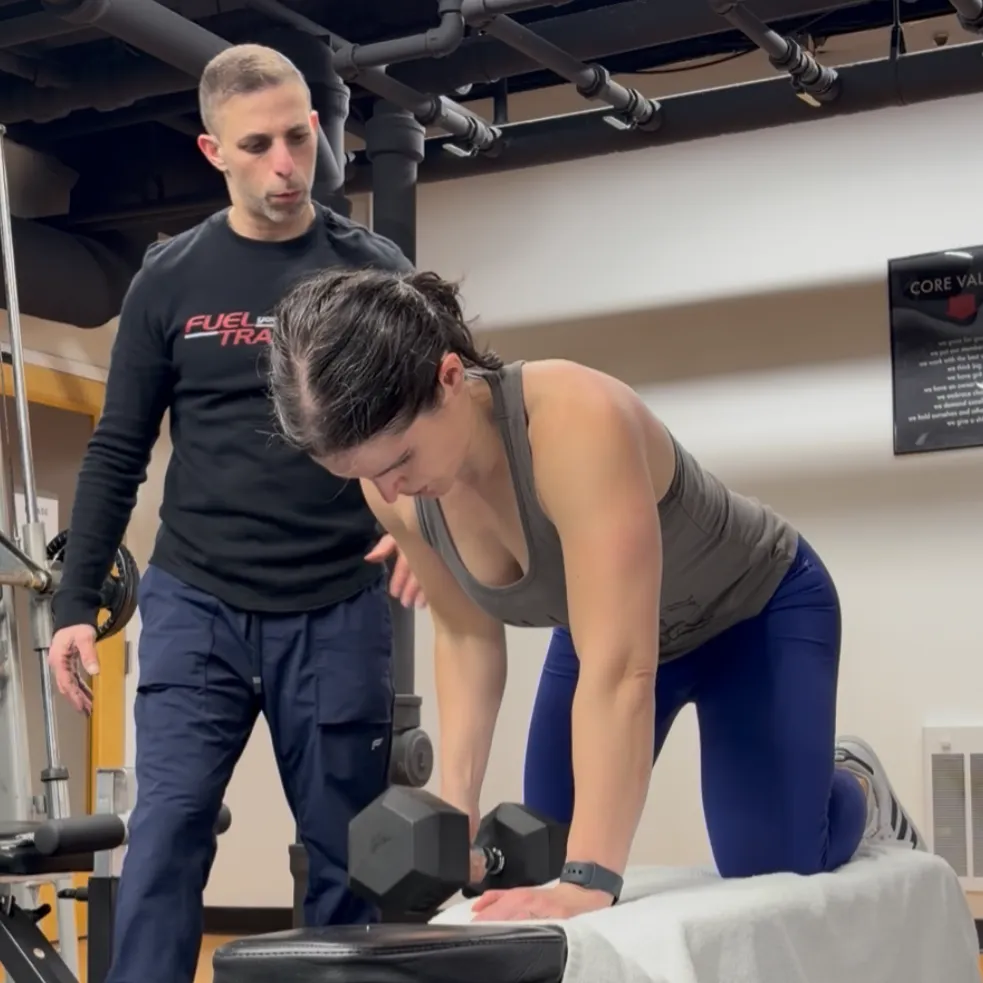
- One side at a time: Single-arm rows, split squats, and step-ups let each side work on its own. You'll often notice one side is weaker or tighter. That's useful information.
- Carries and holds: Carrying a weight in one hand while walking tall teaches your trunk to stay steady without forcing a "perfect" posture.
- Controlled range first: We use a range of motion you own before we add weight. More range comes when it feels comfortable.
- Slow progress on purpose: We add weight in small steps and check in every session. Sore muscles are fine. A back that feels worse the next day means we adjust.
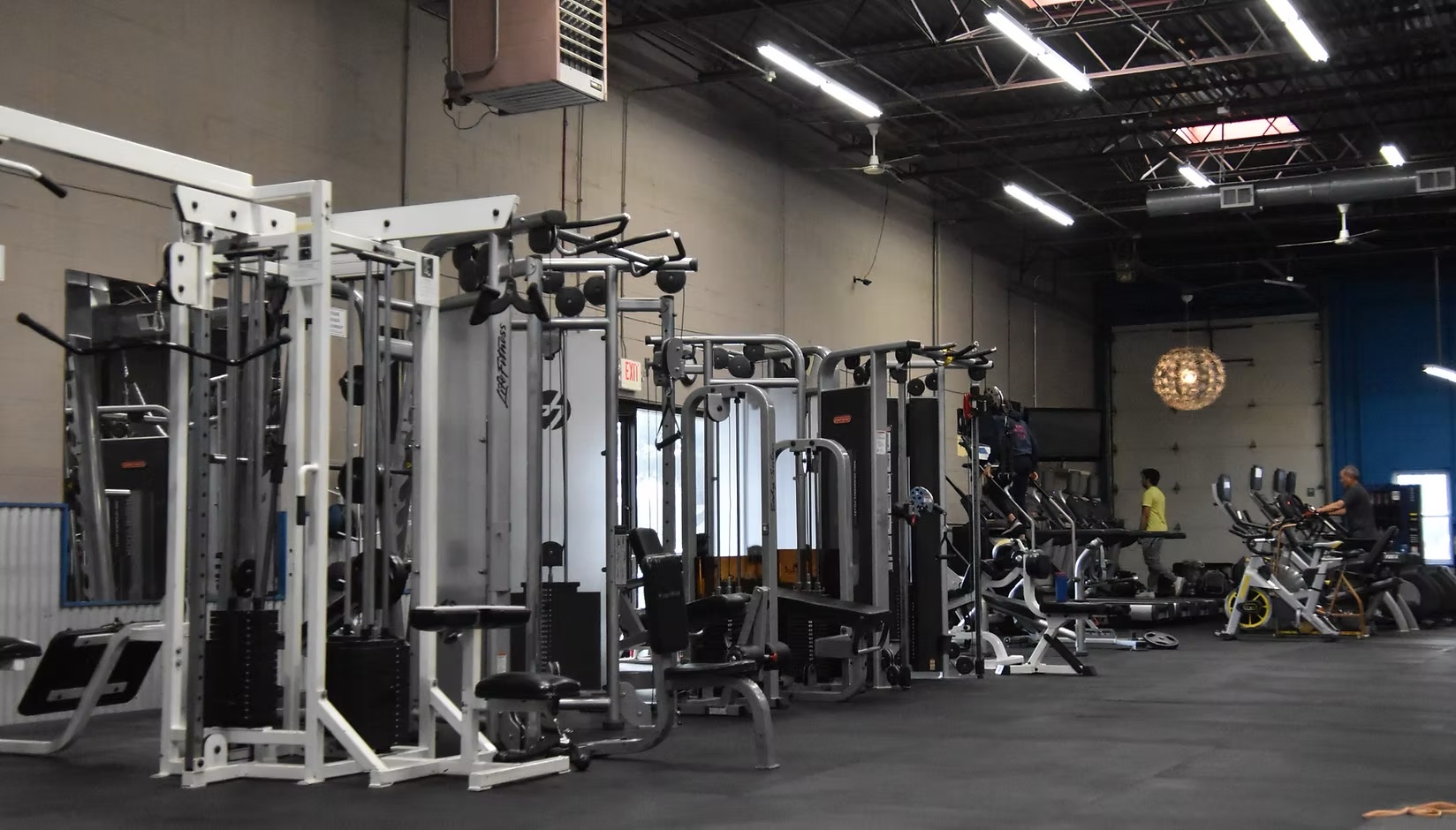
The training floor at Fuel Your Training on Paddock Drive. It's appointment only, so nobody is waiting on your equipment while you take your time.
What to Be Careful With
None of these are automatic bans. Your doctor decides what's off the table. These are the areas where we slow down and check in more often.
- Heavy loads on the spine: You don't need a heavy barbell on your back to get strong. There are plenty of other ways to load your legs.
- Twisting under load: Fast, heavy rotation is where many people with back issues feel trouble first.
- Chasing symmetry: Your body may never look even, and it doesn't need to. Getting stronger on both sides matters more than looking level in the mirror.
- Copying someone else's program: What works for a friend or a class may not suit your curve.
📌 Key Takeaway: The goal is a stronger, more capable body you can keep training for years. A perfectly straight spine isn't the target, and any coach who promises one is overselling.
One-on-One or Semi-Private?
If you're new to training with scoliosis, we usually suggest starting one-on-one. You get a coach's full attention while we learn how your body responds. That means more questions, more adjustments, and no rushing.
Once you know your program and your warning signs, semi-private training is often a good next step. That's two to four people with one coach, each on their own plan, starting at $50 a session. You still get coached on every set, for less than private sessions. Call us for current one-on-one rates.
Scoliosis often comes with general back pain. If that's part of your story too, our guide to personal training for chronic back pain covers how we handle it.
Strength Training With Scoliosis: The Short Version
- Get cleared first: Your doctor or physical therapist sets the limits. Ask about movements, loads, and warning signs.
- Coaching comes after PT: A trainer builds general strength and consistency. A trainer doesn't replace scoliosis-specific therapy.
- Your program should fit you: Single-side work, carries, and controlled range are common starting points, adjusted to how you feel.
- Progress slowly: Small steps, frequent check-ins, and changes when something doesn't sit right.
- Measure what you can do: Track progress by strength and daily function, not by how level you look.
Train With a Coach Who Asks Before Adding Weight
Fuel Your Training is a private, appointment-only studio at 1430 Paddock Dr in Northbrook. We work with adults from Northbrook, Glenview, Deerfield, Wilmette, and across the North Shore, including many who train around a spinal condition. Your first visit is a free intro session. We talk through your history, look at how you move, and you leave with a plan, whether you train with us or not.
Book your free intro session or call us at (312) 735-1010.